Ama Dablam with Lobuche Peak Climbing
Ama Dablam with Lobuche Peak Climbing by Amadablam Expeditions is a demanding Himalayan mountaineering adventure that combines the ascent of Lobuche East (6,119 m/20,070 ft) with the technical summit of Ama Dablam (6,812 m/22,349 ft) in Nepal’s Khumbu region. Designed as a 24-day expedition, the journey brings together high-altitude trekking, acclimatization, peak climbing, Sherpa culture, and technical Himalayan mountaineering in one carefully structured adventure.
The expedition begins in Kathmandu before continuing by flight to Lukla, followed by a classic trek through the Khumbu Valley. The route passes through renowned Sherpa settlements including Phakding, Namche Bazaar, Tengboche, Dingboche, and Lobuche, allowing climbers to gradually gain altitude while experiencing the spectacular landscapes and mountain culture of the Everest region. Strategic acclimatization days at Namche Bazaar and Dingboche form an important part of the journey before entering the higher climbing terrain.
The first major climbing objective is Lobuche East, a 6,119-meter peak located near the Everest Base Camp region. From Lobuche, climbers ascend toward High Camp before making an early-morning summit attempt across rocky sections, snow slopes, and icy terrain. From the summit, the surrounding Himalayan panorama includes Everest, Lhotse, Nuptse, Ama Dablam, and other major peaks of the Khumbu.
After completing Lobuche Peak, the expedition moves toward Ama Dablam Base Camp at 4,570 meters. Here, climbers have a rest period and participate in a traditional puja ceremony before beginning the technical ascent. The Ama Dablam route progresses through Camp I at 5,700 meters and Camp II at 6,000 meters, followed by the summit push toward 6,812 meters. The climb involves steep snow and rock terrain and requires appropriate mountaineering skills, preparation, and high-altitude experience.
With its combination of two significant Himalayan summits, the Ama Dablam with Lobuche Peak Climbing itinerary provides a distinctive progression from trekking in the Everest region to serious technical climbing on one of Nepal’s most recognizable mountains. Amadablam Expeditions describes the program as a difficult-grade expedition conducted during the principal spring and autumn climbing seasons, with tea-house and tent accommodation and Sherpa-led mountain support.
For climbers searching for Ama Dablam and Lobuche Peak climbing in Nepal, this expedition offers an integrated Himalayan experience—beginning with the legendary trails of the Khumbu and culminating in two high-altitude summit objectives within a single journey.
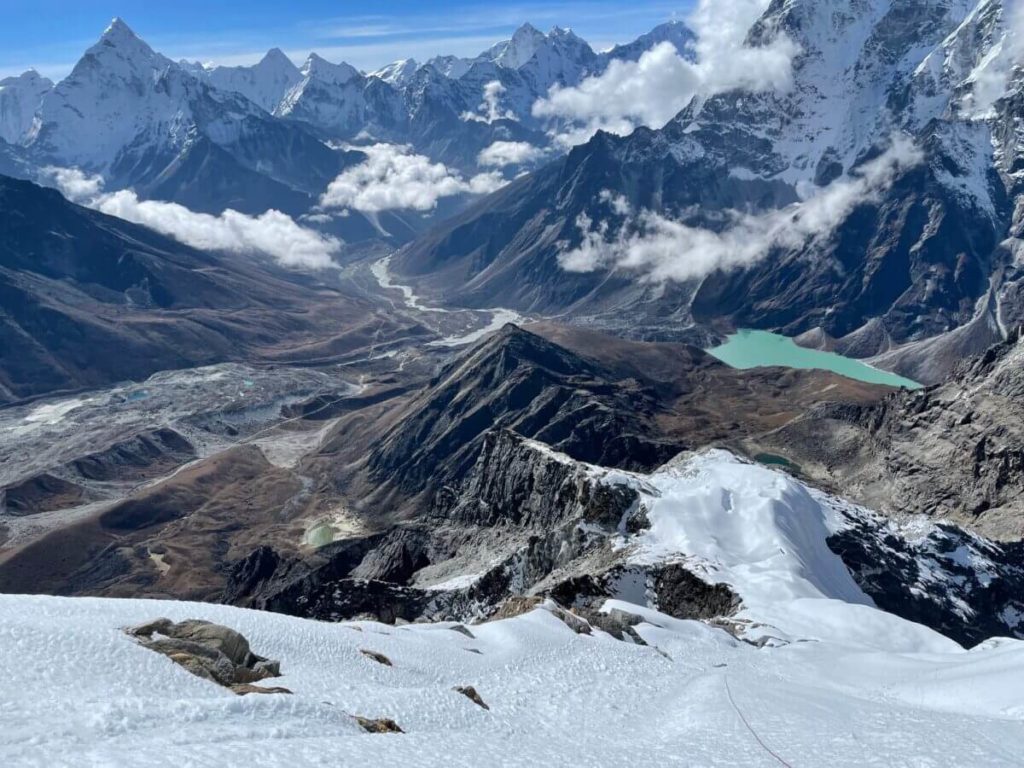
What are The Climbing Route and Difficulties of Duel Amadablam Expeditions with Lobuche Peak?
The Ama Dablam with Lobuche Peak Climbing route is a demanding 24-day Himalayan expedition that combines high-altitude trekking with two distinct climbing objectives: Lobuche East at 6,119 m (20,070 ft) and Ama Dablam at 6,812 m (22,349 ft). Amadablam Expeditions classifies the overall trip as Difficult, with the main climbing season in spring and autumn.
The Climbing Route
The journey starts in Kathmandu and continues with a flight to Lukla (2,840 m). From Lukla, the trail follows the Dudh Koshi Valley through Phakding and Namche Bazaar, where an acclimatization day helps prepare for increasing altitude. The route then continues to Tengboche and Dingboche (4,410 m), followed by another acclimatization day before reaching Lobuche (4,910 m).
From Lobuche, the expedition moves beyond normal trekking terrain toward Lobuche Peak High Camp at 5,400 m. The summit attempt begins before dawn and involves rocky sections, snow slopes, icy terrain, and fixed ropes where required. Climbers aim for the 6,119 m Lobuche East summit before descending to Pheriche. The summit day is scheduled for approximately 8–10 hours, making it a significant physical challenge.
After Lobuche, the route continues to Ama Dablam Base Camp at 4,570 m. Following a rest day and traditional puja ceremony, climbers progress through Camp I at 5,700 m and Camp II at 6,000 m. The final summit push reaches Ama Dablam at 6,812 m, followed by descent to Camp II and eventually Base Camp.
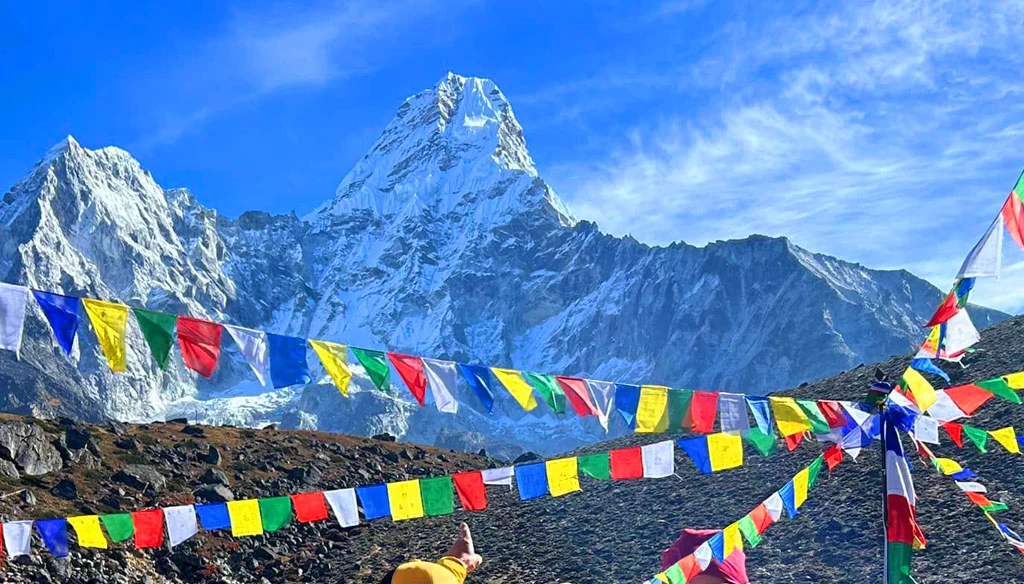
Lobuche Peak, particularly Lobuche East at 6,119 meters (20,075 feet), is one of Nepal’s popular high-altitude climbing objectives in the Everest region. Although it is often described as a trekking peak, the summit involves genuine mountaineering: high-altitude trekking, glacier travel, steep snow and ice, fixed ropes, crampons, and an exposed summit ridge.
With Amadablam Expeditions, climbers should understand that the difficulty is not caused by one exceptionally technical section. Rather, it comes from the combination of extreme altitude, sustained physical effort, technical terrain, cold, changing weather, and a long summit day.
1. Extreme Altitude and Thin Air
The biggest challenge is altitude. At 6,119 meters, Lobuche East is high enough that the reduced oxygen availability significantly affects physical performance. Even climbers with excellent fitness can become tired much faster than they would at lower elevations.
The approach through the Khumbu also involves spending several nights at progressively higher elevations. This makes proper acclimatization essential. Headache, nausea, unusual fatigue, dizziness, or loss of appetite can indicate altitude-related problems and should never simply be treated as normal tiredness.
This is why a well-planned itinerary, gradual ascent, hydration, adequate rest, and careful monitoring by the climbing team are important.
2. Steep Snow and Ice
The character of the journey changes considerably once climbers leave the trekking trail and move toward the climbing sections.
The upper part of Lobuche East includes steep snow and ice terrain. Depending on seasonal conditions, slopes can reach approximately 40–50 degrees or more, requiring deliberate crampon footwork and appropriate use of an ice axe.
At lower elevations, a climber can usually walk naturally. On steep frozen terrain, however, every step needs to be placed carefully. Poor footwork can waste considerable energy, which becomes especially important at more than 5,500 meters.
3. Fixed-Rope Climbing and Jumar Technique
One of the defining challenges of Lobuche East is the steep section climbed using fixed ropes.
Climbers generally use a harness, carabiners and a mechanical ascender, commonly called a Jumar, to move upward while secured to the fixed line. Descending may involve controlled rope techniques depending on the route and climbing team's system.
The technique itself can be learned, but using it efficiently at altitude is different from practising it at low elevation. A climber who pulls excessively with the arms or moves inefficiently can quickly become exhausted.
For this reason, pre-climb practice with crampons, harnesses, ascenders and ice axes is highly valuable.
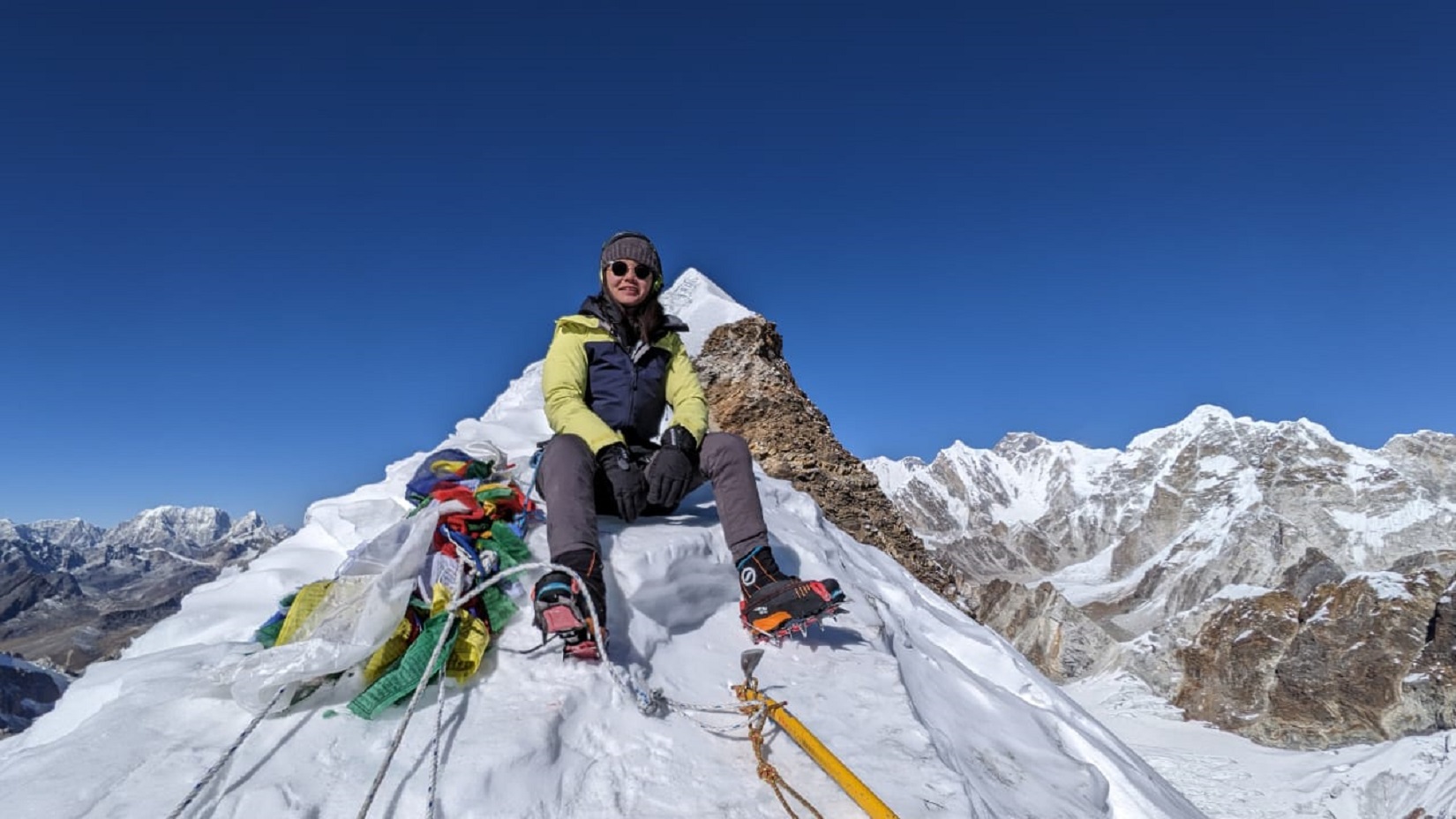
4. Glacier and Crevasse Terrain
The route also involves glacier terrain. Snow and ice can conceal cracks or crevasses, and conditions can change throughout the climbing season. Rope-team procedures and experienced route selection are therefore important.
This is one reason climbers should not treat Lobuche Peak as simply a longer version of Everest Base Camp Trek. The mountain environment requires different equipment, techniques and decision-making.
5. The Exposed Summit Ridge
After the steeper climbing sections, the challenge does not immediately disappear. The final ridge toward the summit can be narrow and exposed, with steep terrain on either side.
At this stage, climbers are already tired and operating in very thin air. Maintaining balance, following the rope system correctly and moving patiently become particularly important.
Wind can make an exposed ridge feel considerably more demanding, so summit conditions can influence how difficult this section becomes.
6. Long and Physically Demanding Summit Day
Summit day is one of the greatest tests of Lobuche Peak climbing. Climbers typically leave High Camp very early, often during the night, to take advantage of favorable morning conditions.
The climb from approximately 5,400 meters at High Camp to 6,119 meters at the summit, followed by the descent, creates a prolonged physical effort. Depending on route conditions, weather and the individual climber, summit-day duration can commonly be around 8–12 hours or more.
The challenge is therefore not simply reaching 6,119 meters. Climbers must conserve enough energy to descend safely after reaching the summit.
7. Cold and Rapidly Changing Mountain Weather
Temperature, wind, snowfall and visibility can change rapidly in the high Himalayas. Cold conditions also make technical equipment more difficult to handle and can reduce dexterity.
A route that feels manageable in stable weather can become considerably more demanding when strong wind, fresh snow, hard ice or poor visibility develops. Therefore, the climbing team's assessment of weather and route conditions is an important part of summit-day decision-making.
8. Mental Strength and Concentration
Lobuche Peak is also mentally demanding.
Steep slopes, exposure, darkness during an early summit start, freezing temperatures and physical exhaustion can create significant psychological pressure. The ability to remain calm, follow instructions, maintain steady movement and avoid rushing is extremely important.
The combination of altitude and fatigue means that patience and concentration are just as valuable as physical strength.
9. Fitness and Previous Experience Matter
Lobuche East does not require the level of technical climbing associated with major Himalayan expeditions, but it should not be underestimated. It requires good cardiovascular endurance, strong legs, stamina for long trekking days and familiarity with basic mountaineering equipment.
Experience with crampons, ice axe techniques, fixed ropes and high-altitude trekking can make the climb considerably more manageable. Training before the expedition should therefore include uphill endurance, strength work and, where possible, practical mountaineering skills.
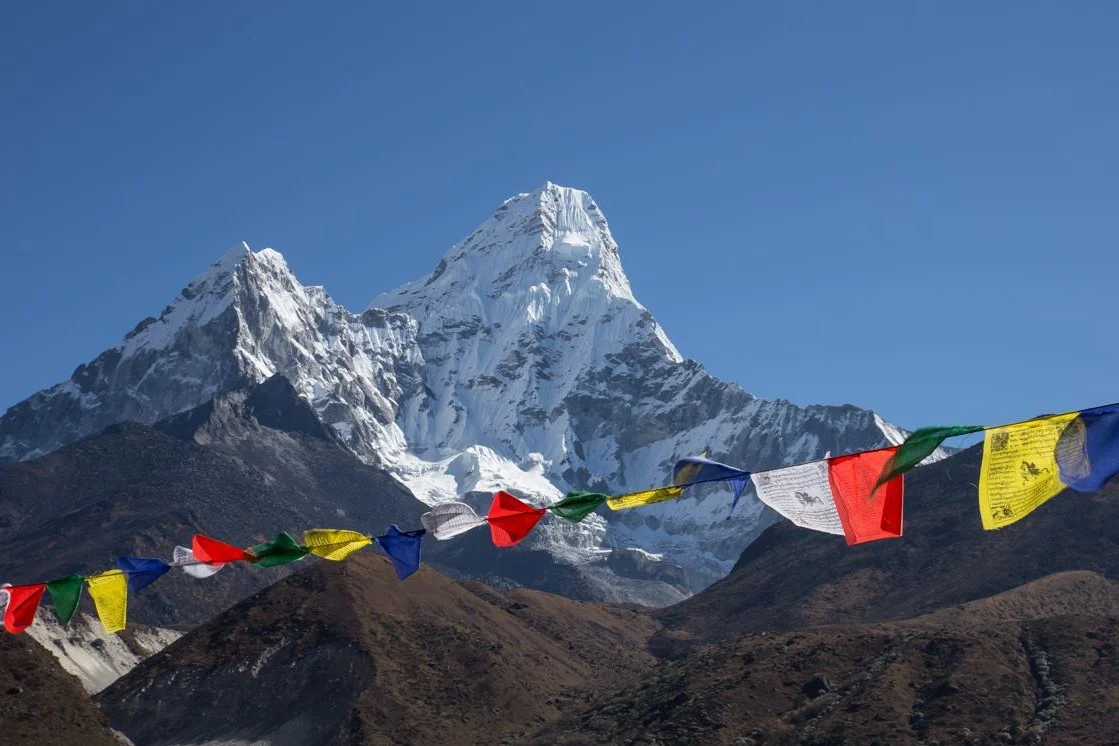
10. Why Lobuche Peak Is Challenging with Amadablam Expeditions?
The real difficulty of climbing Lobuche Peak with Amadablam Expeditions can be understood as a combination of:
- 6,119-meter altitude
- Thin air and altitude-related risks
- Long approach trekking
- Steep snow and ice
- Crampon and ice-axe use
- Fixed-rope and Jumar climbing
- Glacier and possible crevasse terrain
- Exposed summit ridge
- Long summit day
- Cold and unpredictable weather
- Physical and mental fatigue
Lobuche East is therefore more than a high-altitude hike. It is a true introductory Himalayan mountaineering experience, where trekking endurance and basic climbing skills come together. With appropriate acclimatization, physical preparation, suitable equipment, experienced mountain support and sensible decision-making, properly prepared climbers can approach the objective with a clear understanding of its demands.
What is the Best Time for Ama Dablam Expedition with Lobuche Peak Climbing?
The best time for Ama Dablam with Lobuche Peak Climbing is during the spring and autumn climbing seasons. Amadablam Expeditions officially operates this 24-day expedition in these two seasons, when conditions are generally more suitable for high-altitude trekking and technical climbing.
Autumn Season Expedition Amadablam : September–November
Autumn is one of the prime periods for the expedition, particularly October and early November. Following the monsoon, the Khumbu region generally offers clearer skies, improved visibility, and relatively stable conditions. These factors are especially important for the technical sections of Ama Dablam and the summit push.
October can provide excellent Himalayan views and favorable climbing conditions, while November becomes progressively colder as winter approaches.
Spring Season Lobuche Peak Climbing with Amadablam Expeditions: April–May
Spring is another major climbing window, offering suitable conditions before the monsoon arrives. April and May are also attractive for the approach trek through the Khumbu, when the lower valleys can feature blooming rhododendrons and vibrant mountain landscapes. (Ama Dablam Expeditions)
Spring can bring more residual snow on higher sections, so climbers should be prepared for changing snow and route conditions.
Which Months Are Most Suitable for Climbing Lobuche with Amadablam Expeditions?
For this combined Lobuche Peak and Ama Dablam expedition, the main windows are:
- April–May: Spring climbing season
- October–early November: Autumn climbing window
- June–August: Monsoon period, generally unsuitable for the standard expedition
- December–February: Winter, with significantly colder and more demanding conditions
The exact summit schedule should ultimately depend on weather, route conditions, acclimatization, and the expedition team's assessment, rather than the calendar alone. Amadablam Expeditions includes contingency days specifically for weather, acclimatization, and health-related conditions.
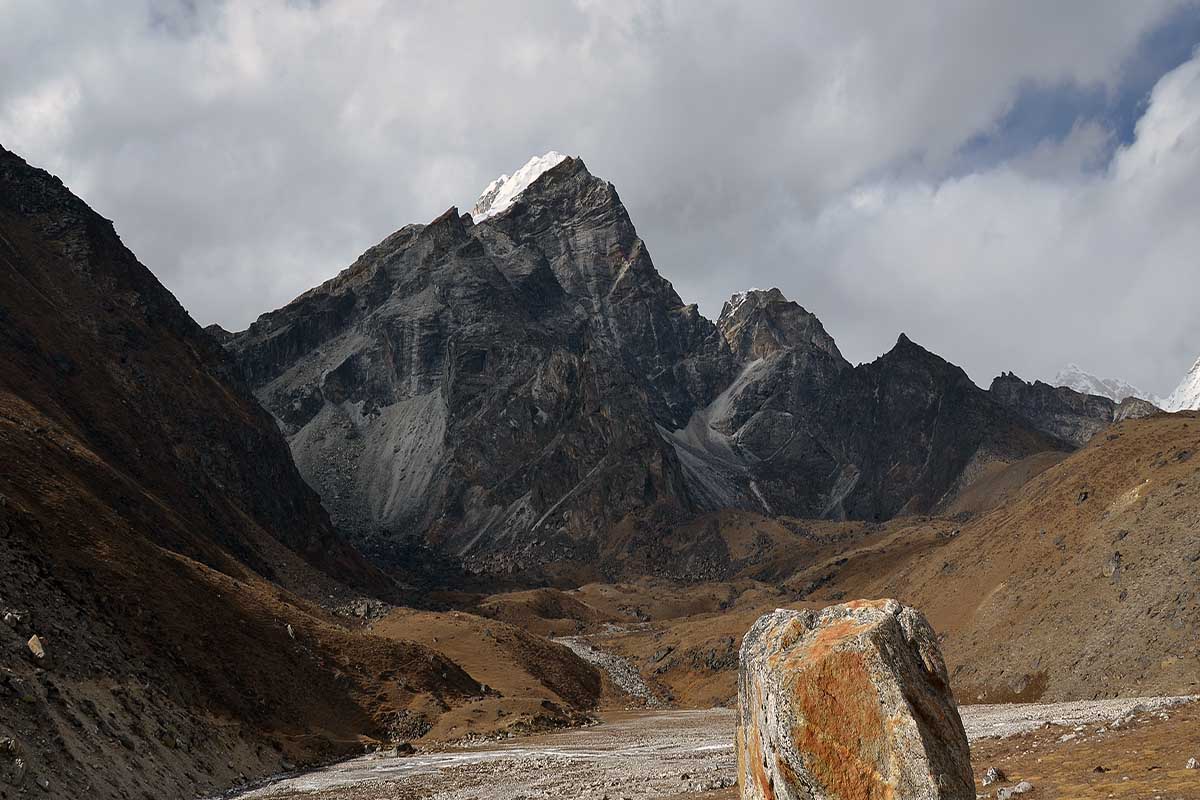
The Top Ten Major Highlights of Expedition Ama Dablam with Lobuche Peak Climbing
1. Two Himalayan Summits in One Expedition
The defining feature of this expedition is the opportunity to attempt two major Himalayan peaks in a single journey: Lobuche East (6,119 m) and Ama Dablam (6,812 m). The itinerary combines the approach and acclimatization required for Lobuche with the more technical climbing demands of Ama Dablam.
2. Classic Khumbu Approach
The expedition follows the renowned Everest-region trekking route, beginning at Lukla and continuing through Phakding, Namche Bazaar, Tengboche, Dingboche, and Lobuche. This approach provides gradual altitude gain while introducing climbers to the landscapes, villages, monasteries, and mountain culture of the Khumbu. Official Expedition Itinerary
3. Lobuche East Summit Experience
At 6,119 meters, Lobuche East provides the expedition's first major climbing objective. The ascent involves reaching High Camp and making an early summit attempt across rocky, snowy, and icy terrain. From the summit area, climbers can experience expansive views across the Everest region, including Everest, Lhotse, Nuptse, Ama Dablam, and surrounding peaks.
4. Ama Dablam Base Camp and Puja
After the Lobuche climbing section, the expedition progresses toward Ama Dablam Base Camp at approximately 4,570 meters. A traditional puja ceremony is conducted before the technical climbing phase. This Buddhist ritual is an important part of many Himalayan expeditions and marks the beginning of the summit-focused stage of the journey.
5. Technical Ama Dablam Climbing
Ama Dablam presents a significantly more technical climbing environment than a standard trekking route. The expedition progresses through Camp I at approximately 5,700 m and Camp II at approximately 6,000 m before the summit attempt. Steep rock, snow, ice, exposed terrain, and fixed-rope sections make this portion a serious mountaineering challenge requiring appropriate skills and preparation.
6. Summit of Ama Dablam
The ultimate objective is the summit of Ama Dablam at 6,812 meters (22,349 feet). The summit push takes climbers into extreme altitude and demanding terrain, where weather, route conditions, acclimatization, and physical preparation can all affect the climbing schedule.
7. Exceptional Himalayan Scenery
Throughout the expedition, climbers encounter some of the most recognizable mountains of the Khumbu, including Mount Everest, Lhotse, Nuptse, Ama Dablam, Makalu, Cho Oyu, and Island Peak. The combination of high mountain scenery, glaciers, valleys, and traditional Sherpa settlements makes the approach itself an important part of the expedition.
8. Sherpa Culture and Buddhist Heritage
The route passes through historic Sherpa communities and Buddhist sites, including Tengboche Monastery and villages throughout the Khumbu. The expedition therefore combines technical mountaineering with an opportunity to experience the cultural heritage of Nepal's Everest region.
9. Acclimatization and Contingency
Because the expedition reaches more than 6,800 meters, acclimatization is a central component of the itinerary. Scheduled acclimatization days and contingency time allow the expedition team to respond to altitude, weather, health, and route conditions rather than treating the itinerary as a fixed timetable.
10. A Complete Himalayan Mountaineering Journey
Ama Dablam with Lobuche Peak Climbing brings together trekking, acclimatization, Sherpa culture, high-altitude camping, technical climbing, and two summit objectives. For climbers preparing for a serious Himalayan expedition, the itinerary provides a progression from the trails of the Khumbu to the demanding high-altitude terrain of Lobuche and Ama Dablam.
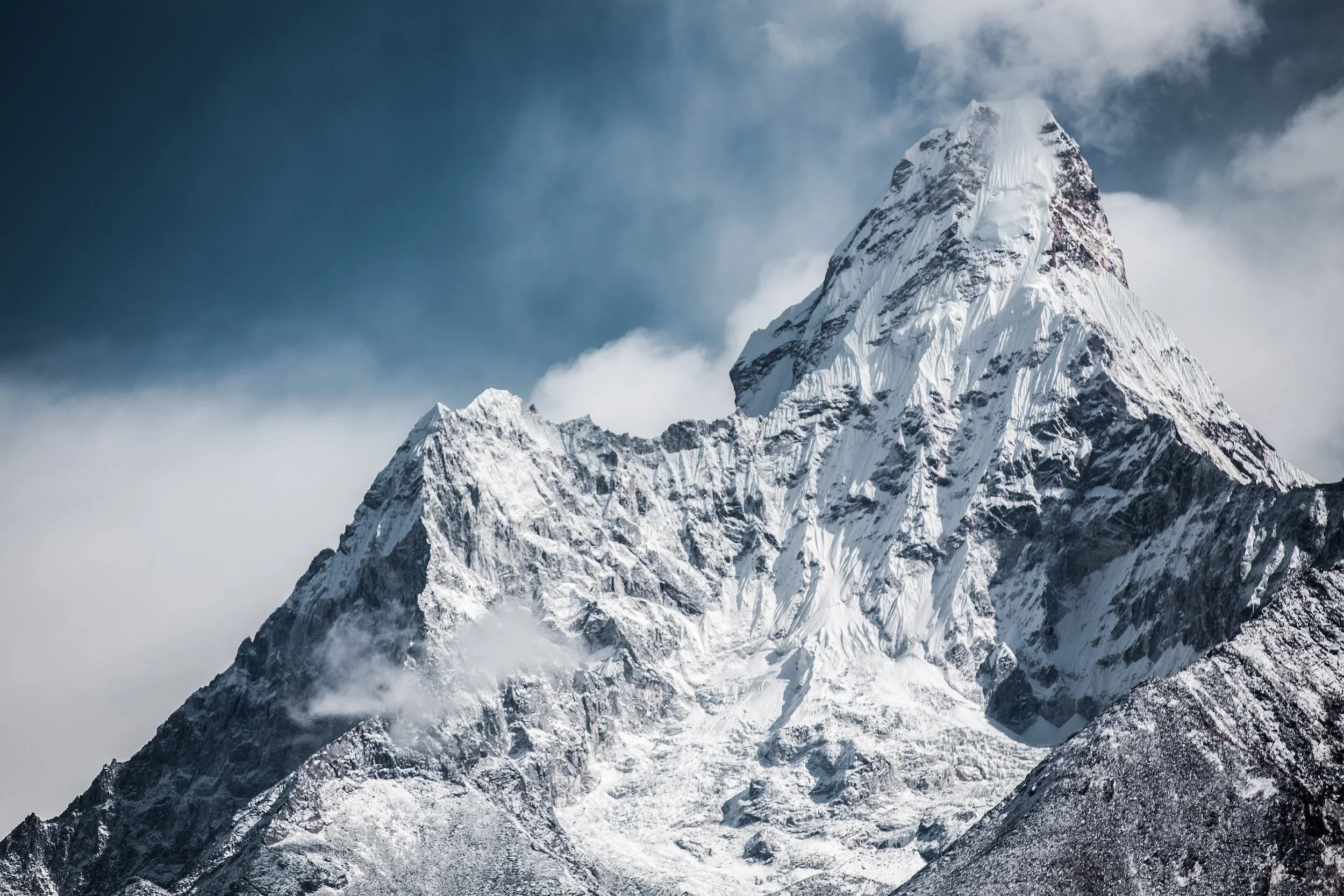
Conclusion: Two Himalayan Summits in One Expedition with Amadablam Expeditions
The Ama Dablam with Lobuche Peak Climbing expedition by Amadablam Expeditions brings together two remarkable Himalayan climbing objectives in one carefully structured adventure: Lobuche East at 6,119 meters (20,070 ft) and Ama Dablam at 6,812 meters (22,349 ft). The journey begins with a classic trek through Nepal's Everest region, allowing climbers to progressively gain altitude while traveling through iconic Khumbu destinations such as Lukla, Namche Bazaar, Tengboche, Dingboche, and Lobuche. After appropriate acclimatization, the expedition moves toward Lobuche East, where climbers face their first major summit objective across rocky, snowy, and icy terrain.
After the Lobuche summit attempt, the expedition continues toward Ama Dablam Base Camp. Here, climbers prepare for the more technical phase of the journey, including a traditional puja ceremony and progression through higher camps. The route to Ama Dablam's summit involves steep rock and snow terrain, exposed sections, and fixed-rope climbing, making proper mountaineering preparation essential.
Reaching the 6,812-meter summit of Ama Dablam completes the expedition's second and higher summit objective. Along the way, climbers experience extraordinary views of Everest, Lhotse, Nuptse, Makalu, Island Peak, and the surrounding Khumbu Himalayas.
By combining Lobuche Peak and Ama Dablam in one itinerary, Amadablam Expeditions creates a progression from high-altitude trekking and peak climbing toward more technical Himalayan mountaineering. The result is a comprehensive expedition encompassing two summits, Sherpa culture, Himalayan landscapes, acclimatization, high-altitude camping, and technical climbing within a single journey.