10 Hidden Facts About the Ama Dablam Expedition: The Technical, Cultural, and Strategic Reality of Climbing Nepal’s Iconic 6,812m Peak
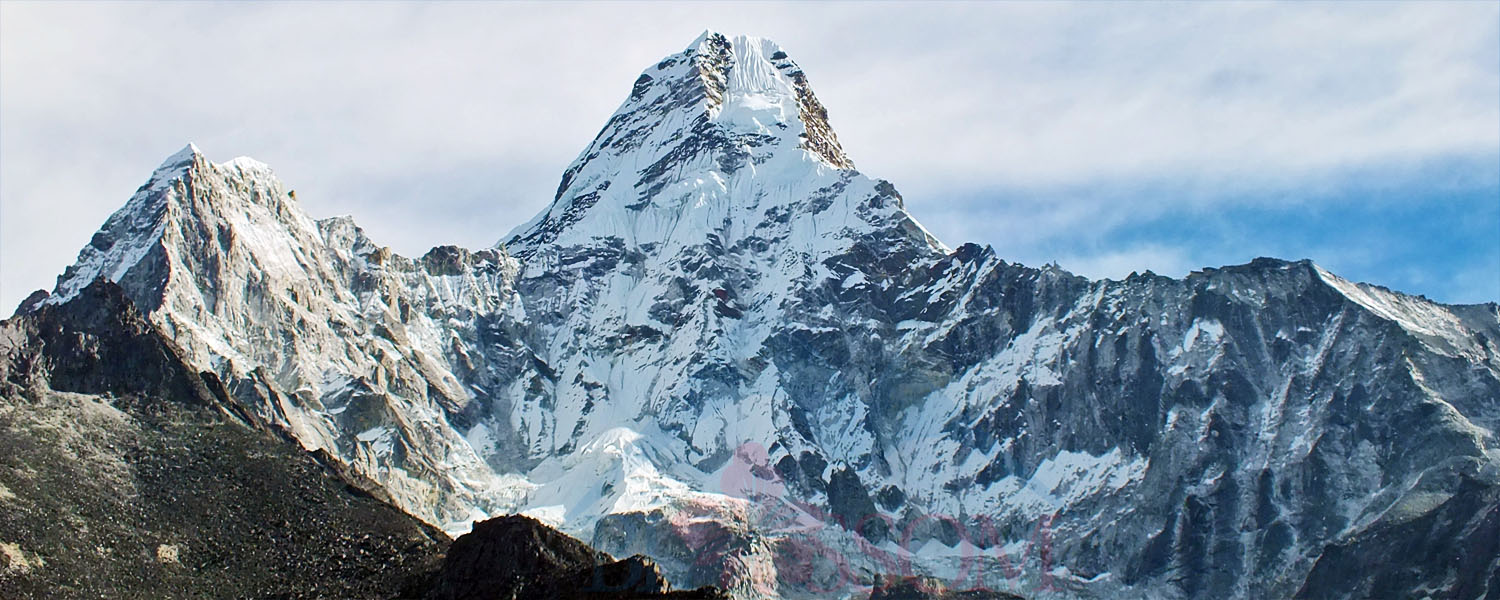
Ama Dablam Expedition is one of Nepal’s most recognizable high-altitude mountaineering experiences. Rising to approximately 6,812 meters (22,349 feet) in the Khumbu region, Ama Dablam is famous for its dramatic pyramid-shaped profile, steep Southwest Ridge, exposed rock sections, snow-and-ice climbing, and extraordinary Himalayan views.
Yet the mountain is much more than a beautiful photograph from the Everest region.
Behind every successful Ama Dablam climbing expedition is a combination of acclimatization, technical climbing ability, route strategy, weather judgment, rope systems, Sherpa expertise, physical endurance, and careful decision-making. Some of the most important characteristics of Ama Dablam are not immediately obvious from photographs or standard trekking descriptions.
This article explores 10 hidden facts about the Ama Dablam Expedition that reveal what makes the mountain technically demanding, historically significant, culturally meaningful, and strategically different from many other Himalayan peaks.
Quick Answer: Ama Dablam is a 6,812m Himalayan peak in Nepal's Khumbu region. Its standard Southwest Ridge route combines high-altitude trekking, exposed rock climbing, fixed-line climbing, mixed terrain, steep snow and ice, and highly exposed sections such as the Yellow Tower and Mushroom Ridge. The mountain was first climbed successfully on 13 March 1961 by Mike Gill, Barry Bishop, Mike Ward, and Wally Romanes.
1. Ama Dablam Is Not Simply a “Trekking Peak” — Its Technical Character Is the Hidden Challenge
One of the biggest misconceptions surrounding the Ama Dablam Expedition is that altitude is the primary challenge.
Altitude certainly matters. At 6,812 meters, the summit environment contains significantly less available oxygen than at sea level, and climbers must spend considerable time acclimatizing before attempting the summit. However, Ama Dablam's difficulty comes from something more complicated: altitude combined with technical climbing and exposure.
Unlike a straightforward snow ascent where climbers primarily walk uphill using crampons, Ama Dablam's Southwest Ridge requires movement through rock, snow, ice, steep sections, exposed ridges, and fixed ropes. Expedition reports describe the terrain between Camp 1 and Camp 2 as steep and exposed, with the Yellow Tower forming one of the route's key technical features.
This means that a climber can be physically strong and still find Ama Dablam challenging if they lack appropriate technical climbing experience.
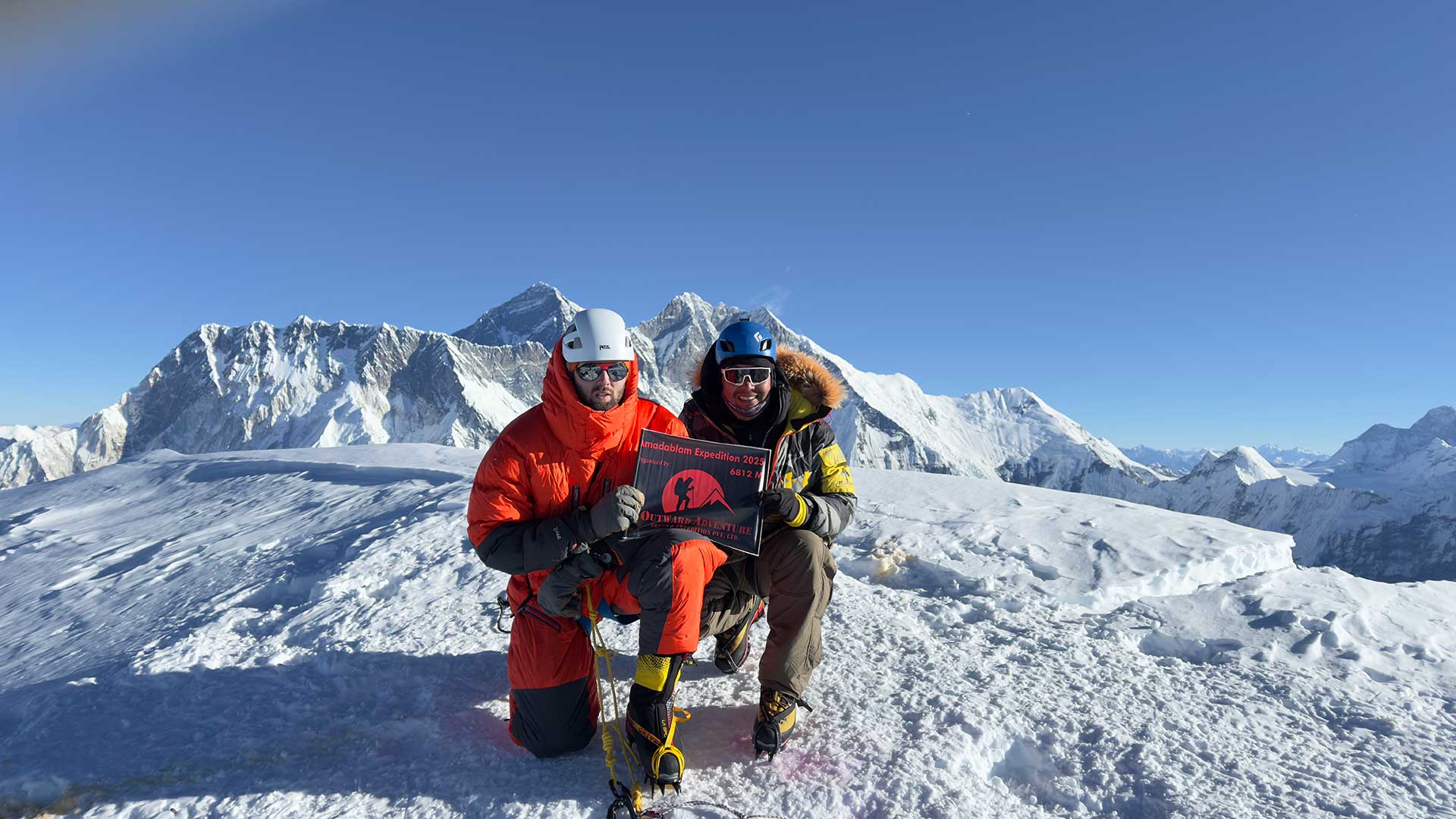
The mountain demands multiple skill sets. A climber may need to scramble efficiently over exposed rock, ascend fixed ropes with an ascender, rappel safely, use crampons on mixed terrain, manage an ice axe, maintain balance on narrow ridges, and move efficiently while carrying equipment at high altitude.
The psychological component is equally important.
Exposure is a defining characteristic of the Southwest Ridge. In several sections, the terrain drops dramatically away from the ridge. The technical difficulty may not always be extreme by professional rock-climbing standards, but performing relatively moderate climbing movements at nearly 6,000 meters is very different from performing them at a climbing wall or low elevation.
This is one reason Ama Dablam climbing preparation should not focus only on cardiovascular fitness. Climbers need technical rope skills, high-altitude experience, efficient movement, and the ability to remain composed in exposed terrain.
Why this matters for an Ama Dablam Expedition?
The distinction between trekking and mountaineering becomes particularly important when evaluating experience.
A climber who has previously completed Island Peak, Lobuche East, Mera Peak, or other high-altitude objectives may have useful acclimatization and expedition experience, but that does not automatically mean they possess all the technical skills required for Ama Dablam.
Ama Dablam is better understood as a technical Himalayan expedition at 6,812 meters, rather than simply a higher trekking peak.
That distinction is essential for anyone researching an Ama Dablam Expedition itinerary, Ama Dablam climbing difficulty, Ama Dablam preparation, or Ama Dablam summit strategy.
2. The Mountain's Name Contains a Story About Protection, Motherhood, and Sherpa Culture
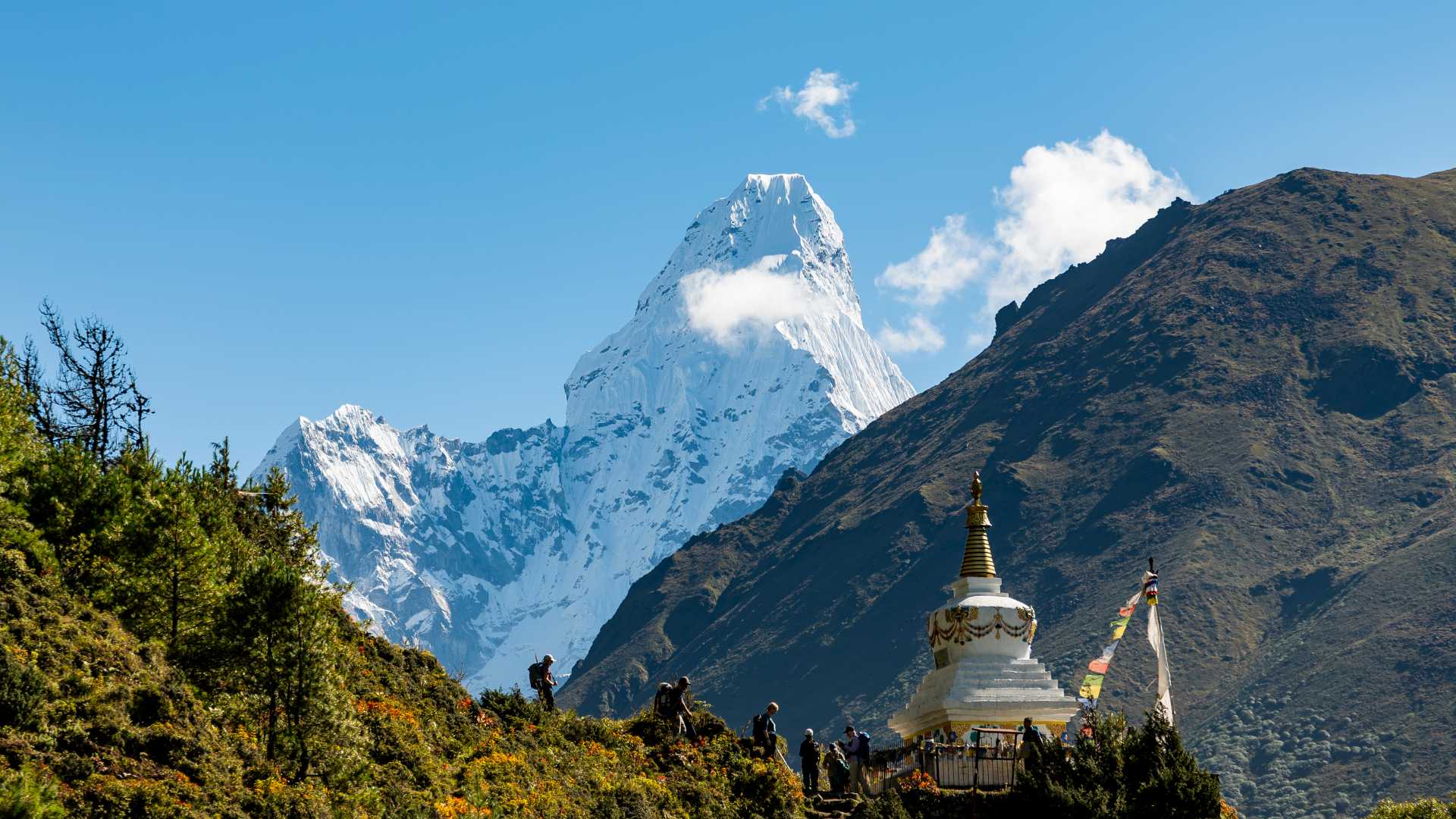
The name Ama Dablam is not simply a geographic label. It carries a powerful cultural image associated with the Sherpa community of the Khumbu.
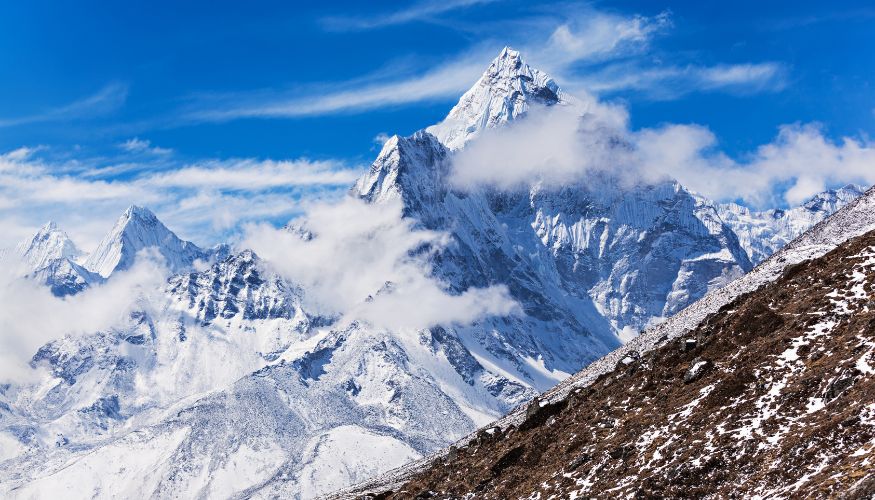
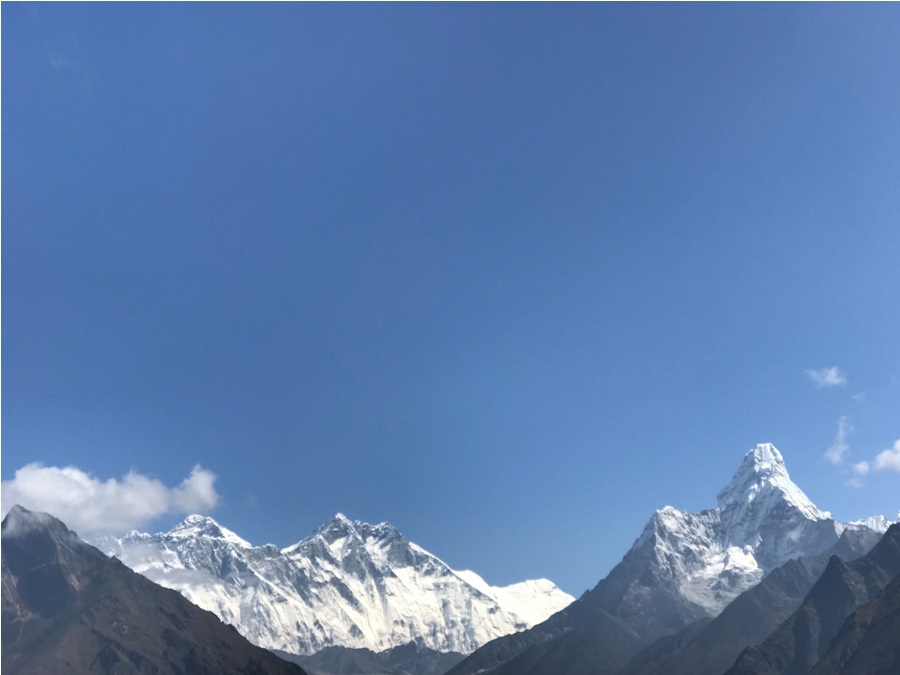
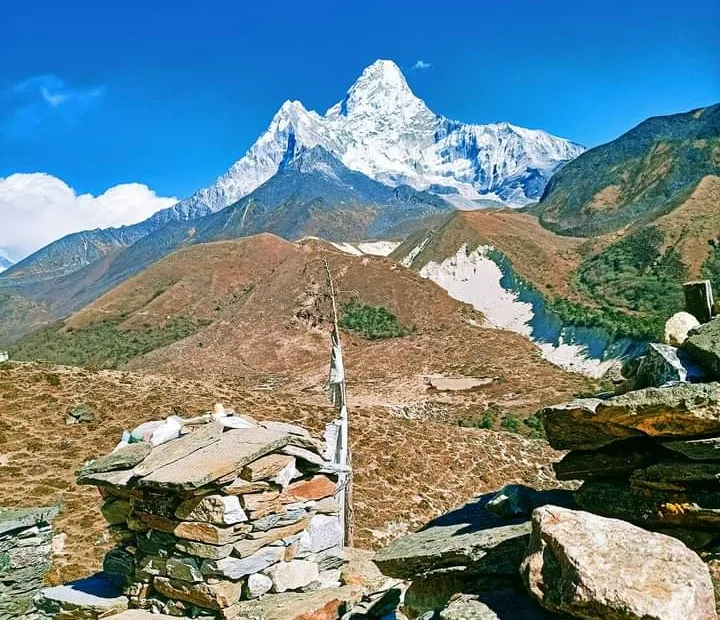
“Ama” means mother, while “Dablam” refers to a traditional double-pendant ornament associated with Sherpa women. The mountain's long ridges and hanging glacier have been compared with a mother wearing a necklace, giving the mountain its distinctive name and symbolism.
This interpretation helps explain why the mountain looks so distinctive.
The central hanging glacier, known as the Dablam, visually resembles a pendant suspended from the mountain. Meanwhile, the major ridges extend outward in a way that evokes protective arms.
For mountaineers, therefore, Ama Dablam is not merely another 6,000-meter objective.
It is a mountain embedded in the cultural landscape of the Khumbu.
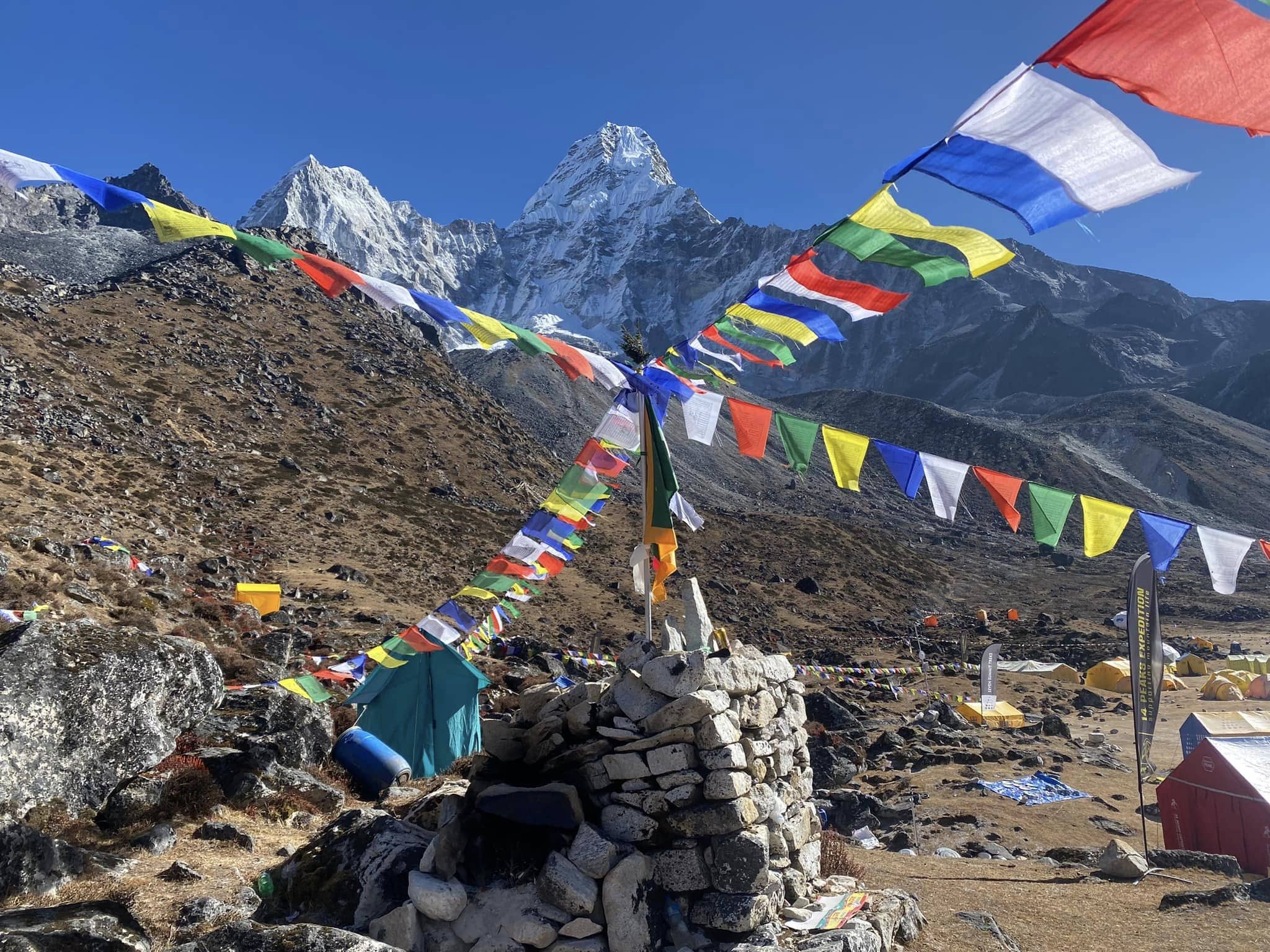
This cultural dimension becomes particularly visible before climbing. Many expeditions conduct a puja ceremony, asking for safe passage and showing respect for the mountain and local traditions. Expedition reports from Ama Dablam describe pre-climb puja ceremonies at Base Camp before teams move above the mountain.
For international climbers, participating in this ceremony can be a memorable part of the expedition because it connects modern Himalayan mountaineering with local traditions that existed long before commercial expeditions became common.
Ama Dablam and the Sherpa worldview
- The cultural significance of the mountain is particularly important because climbing in Nepal does not occur in isolation from local communities.
- Sherpa guides, high-altitude workers, cooks, porters, expedition operators, and local communities collectively contribute to the Himalayan expedition economy.
- Consequently, an Ama Dablam Expedition in Nepal is simultaneously a mountaineering undertaking and an experience within the cultural landscape of the Khumbu.
That is one reason responsible expedition planning should include not only technical preparation but also cultural respect.
3. Ama Dablam's First Ascent Was Far More Technical Than Many Modern Climbers Realize
Ama Dablam's modern climbing history is another fascinating hidden fact.
The mountain was first successfully climbed on 13 March 1961 by Mike Gill of New Zealand, Barry Bishop of the United States, Mike Ward of Britain, and Wally Romanes of New Zealand, via the Southwest Ridge. They were associated with the 1960–61 Silver Hut expedition led by Sir Edmund Hillary.
The original ascent was not comparable to the contemporary guided experience many climbers encounter today.
A report from the American Alpine Club records Bishop's description of the 1961 climb. The team encountered difficult climbing above approximately 19,500 feet and used about 1,400 feet of fixed ropes, 46 pitons, three étriers, and 100 feet of wire ladders. Four camps were established, with the highest camp situated around 21,000 feet in an ice cave.
That historical detail changes how we should understand Ama Dablam.
The mountain's reputation for technical climbing was established during its earliest ascent.
Modern climbers benefit from decades of accumulated route knowledge, improved equipment, fixed-line systems, modern weather forecasting, professional high-altitude guiding, communication systems, and better logistics. Yet the underlying mountain remains steep, exposed, and technically demanding.
The equipment may have changed, The mountain has not.
Why the 1961 ascent matters today for the Amadablam Expeditions?
Understanding the first ascent provides useful perspective for anyone researching the history of Ama Dablam Expedition.
- It demonstrates that Ama Dablam was never merely famous because of its appearance. Its reputation emerged from genuine technical climbing challenges.
- The original expedition also highlights how much Himalayan expedition technology has evolved.
- Modern climbers may use lightweight technical clothing, advanced climbing harnesses, mechanical ascenders, modern crampons, satellite communication, GPS navigation, weather forecasting, and sophisticated expedition logistics.
- The 1961 climbers had none of these advantages in their modern form.
Their ascent therefore occupies an important place in the history of Himalayan mountaineering.
4. Camp 2 Is One of the Most Unusual High-Altitude Camps in the Himalayas
Many people imagine a Himalayan camp as a relatively spacious collection of tents on a snowfield.
Ama Dablam can be very different.
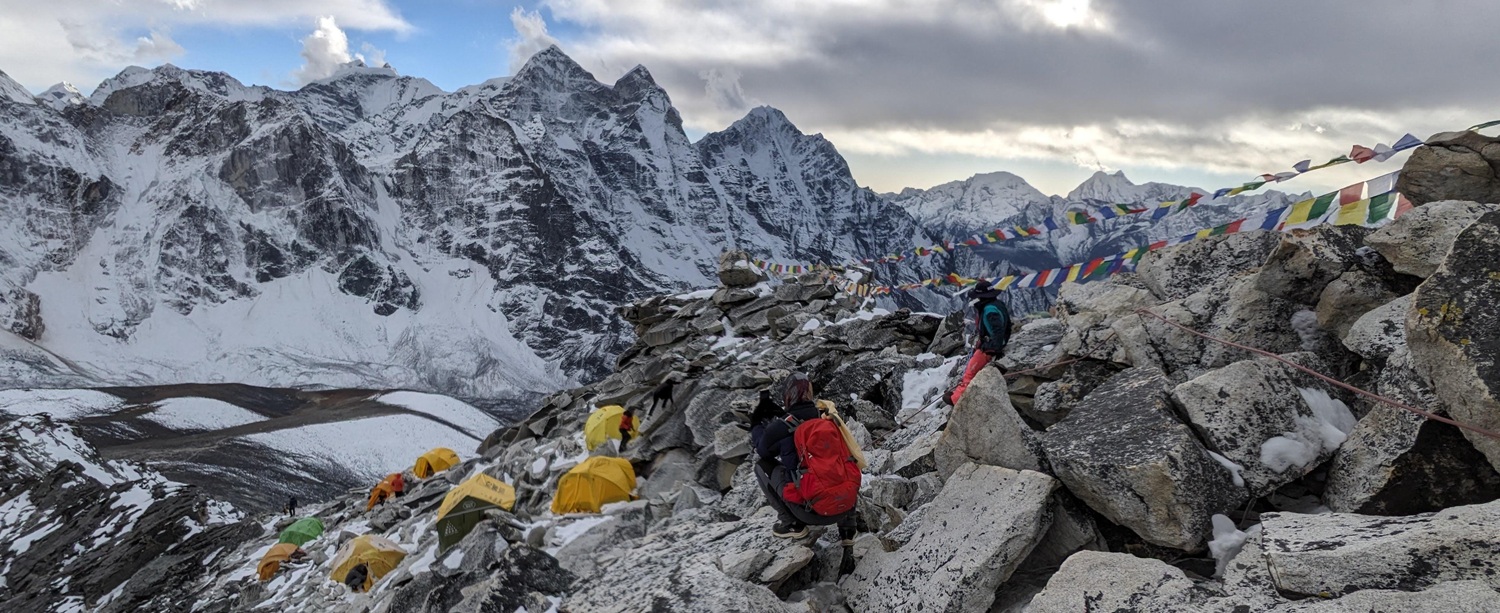
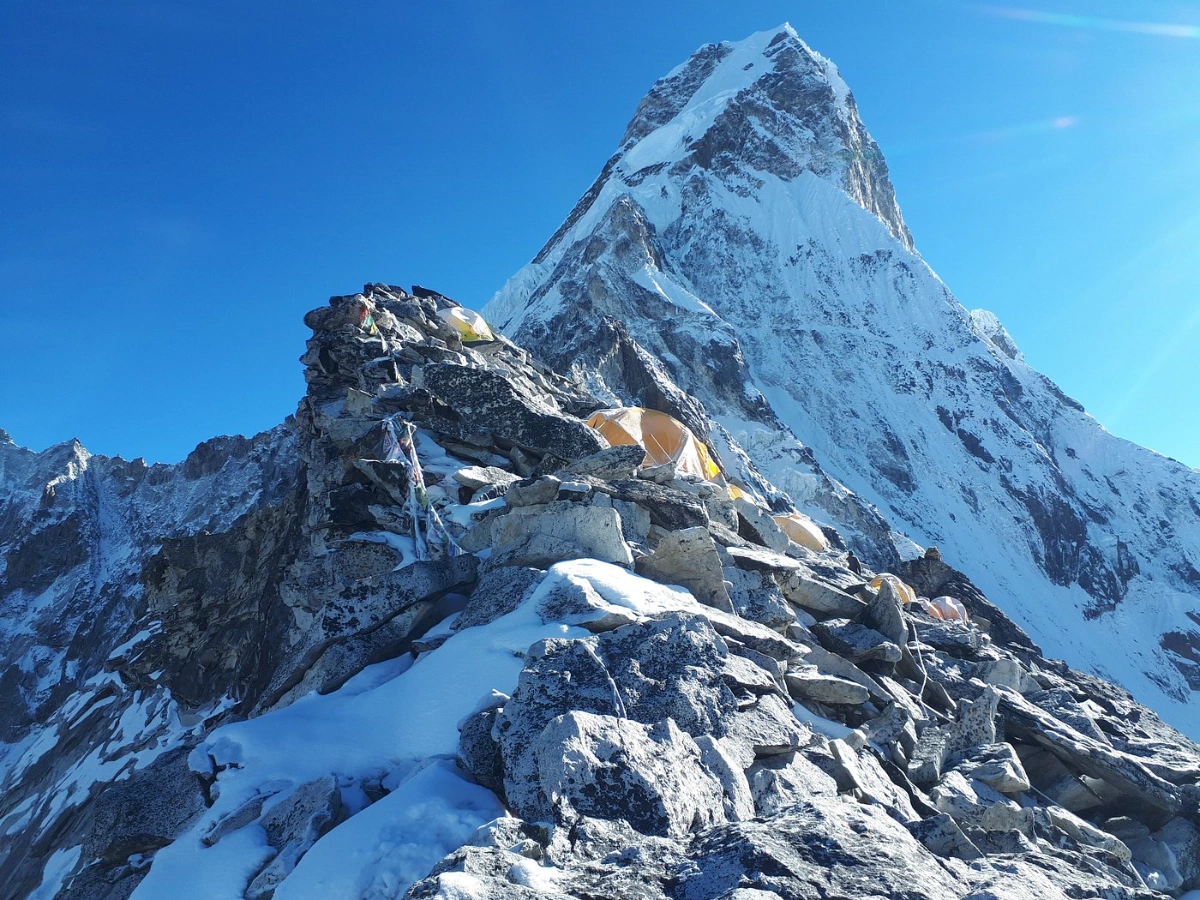
Camp 2 is famously exposed and positioned on a small rock platform/pillar along the Southwest Ridge. Expedition descriptions emphasize how limited the available space can be. One climbing description notes that Camp 2 sits on small ledges and a rock pinnacle, making it an unusually exposed high-altitude camp.
- This creates an interesting logistical problem.
- There may be little room for tents.
- There is limited space to move around.
- Weather can make the environment extremely uncomfortable.
- And at approximately 6,000 meters, even basic tasks require significantly more effort.
The location also demonstrates a broader principle of Himalayan expedition planning: route difficulty is not determined only by vertical elevation.
A camp can be technically challenging because of its location, exposure, available space, weather protection, and proximity to hazards.
Why Camp 2 matters during Amadablam Expeditions?
The psychological experience of reaching Camp 2 can be completely different from arriving at a conventional trekking lodge.
- Below Base Camp, climbers have relatively comfortable facilities.
- At higher camps, comfort disappears rapidly.
- Sleeping becomes harder. Appetite can decrease. Recovery slows. Water management becomes more complicated. Temperatures can fall dramatically. Every movement costs more energy.
- And Camp 2 is positioned directly within the technical environment of the route.
Therefore, Ama Dablam Camp 2 is not simply another checkpoint on an itinerary.
It is an important transition between the lower technical climbing and the increasingly complex upper mountain.
5. The Yellow Tower Is a Small Feature With a Huge Reputation
Perhaps the most famous technical feature of the standard Ama Dablam route is the Yellow Tower.
The name sounds almost harmless. The climbing is not.
The Yellow Tower is located between Camp 1 and Camp 2 and represents one of the route's key rock-climbing sections. Different route descriptions give somewhat different technical grades and dimensions depending on the exact line and climbing conditions, but all emphasize its steep character and technical importance.
What makes the Yellow Tower particularly interesting is not simply its steepness.
It is the altitude at which the climbing occurs.
At around 5,800–6,000 meters, climbers are operating in an environment where reduced oxygen availability affects physical performance. A movement that would be easy at low elevation can become much more demanding after hours of climbing.
The climber must manage during their Ama Dablam Expedition:
- Harness and rope systems
- Ascender technique
- Footwork
- Rock climbing movement
- Exposure
- Cold temperatures
- Heavy clothing
- Gloves
- Backpack weight
- Reduced oxygen availability
- Fatigue
This combination makes the Yellow Tower an important test of expedition efficiency.
The hidden lesson for Ama Dablam Expedition!
- The Yellow Tower demonstrates why technical climbing at altitude is different from technical climbing at sea level.
- It is not enough to know how to climb rock.
- You must be able to climb rock while cold, tired, oxygen-deprived, exposed, and potentially carrying expedition equipment.
- That is why technical training should form a major component of Ama Dablam Expedition preparation.
6. Mushroom Ridge Is Not Just a Scenic Ridge — Snow and Cornice Conditions Matter
Above Camp 2, the character of the climb changes again.
The route eventually reaches the spectacular Mushroom Ridge, named for the mushroom-like snow formations and cornices that develop along the ridge. Route descriptions identify this section as one of the most exposed parts of the climb, with substantial drops on either side.
Photographs often make Mushroom Ridge look almost surreal.
A narrow snow-covered crest stretches toward the upper mountain while huge Himalayan peaks rise in the distance.
But the visual beauty hides an important technical reality.
Snow ridges are dynamic environments.
Wind changes snow distribution.
Temperature affects snow stability.
Cornices can grow, weaken, break, or change shape.
Fresh snowfall can obscure terrain.
Ice conditions can become harder or softer depending on temperature.
This means the same route can feel substantially different from one season or day to another.
Why Ama Dablam Expedition route conditions matter more than photographs?
A photograph cannot tell a climber whether the ridge is:
- Firm and consolidated
- Icy
- Wind-loaded
- Freshly covered
- Soft
- Corniced
- Stable
- Potentially unstable
That information comes from direct observation, experienced guides, route-fixing teams, weather forecasts, and current mountain conditions.
This is why Ama Dablam climbing conditions should always be evaluated close to the expedition rather than based exclusively on historical photographs or descriptions.
7. Camp 3 Strategy Has Changed Because of Mountain Conditions
Another lesser-known aspect of Ama Dablam is that the use and location of higher camps can change depending on conditions.
Some traditional route descriptions place Camp 3 around 6,300 meters, above Mushroom Ridge. However, contemporary expedition information indicates that the traditional Camp 3 area may not always be used because of avalanche or serac-related concerns. Some operators instead use alternative strategies, including pushing from Camp 2 or establishing temporary/high camps in locations judged more suitable under current conditions.
This is a crucial concept in Himalayan climbing: An expedition itinerary is not always a rigid script.
Mountain conditions can change.
The route can change.
Fixed ropes can change.
Snow conditions can change.
Weather can change.
And expedition leaders must adapt.
For example, contemporary expedition reports have documented teams using Camp 2.7 around 6,250–6,280 meters as part of their summit strategy.
This illustrates the difference between a trekking itinerary and a serious mountaineering expedition.
A trekking itinerary can usually be described as:
Walk from A to B, sleep, and continue.
An expedition itinerary is more accurately described as:
Move upward according to acclimatization, weather, route conditions, team health, fixed-line status, and summit strategy.
That flexibility can be decisive.
8. Acclimatization on Ama Dablam Is a Strategic Process, Not a Rest Day
Many people hear the word acclimatization and imagine simply spending a day resting.
That is an incomplete understanding.
Acclimatization is an organized process of allowing the body to adapt to increasing altitude.
On Ama Dablam, expedition teams commonly make rotations toward the higher camps before returning to Base Camp for recovery. For example, one documented expedition completed an acclimatization rotation involving two nights at Camp 1 and a climb toward Camp 2 before returning to Base Camp.
Another expedition report describes teams climbing to Camp 1, moving toward Camp 2, and then descending again before the summit attempt.
This strategy has several purposes.
First, it introduces the body to higher elevation.
Second, it provides valuable information about individual performance.
Third, it allows climbers and guides to evaluate equipment.
Fourth, it familiarizes the team with the route.
Fifth, it allows teams to identify technical sections that may become more difficult during the summit push.
Acclimatization also creates route familiarity
There is an underrated psychological advantage.
During the first rotation, a climber learns what is ahead.
The Yellow Tower is no longer an unknown feature.
Camp 2 becomes familiar.
The route above becomes visually recognizable.
The team can estimate movement times more accurately.
On summit day, familiarity reduces uncertainty.
This is one reason Ama Dablam summit preparation should be viewed as a progressive process rather than a single summit-day event.
9. The Expedition Can Become a Test of Rope Management as Much as Physical Strength
Another hidden aspect of Ama Dablam is the importance of fixed-rope technique.
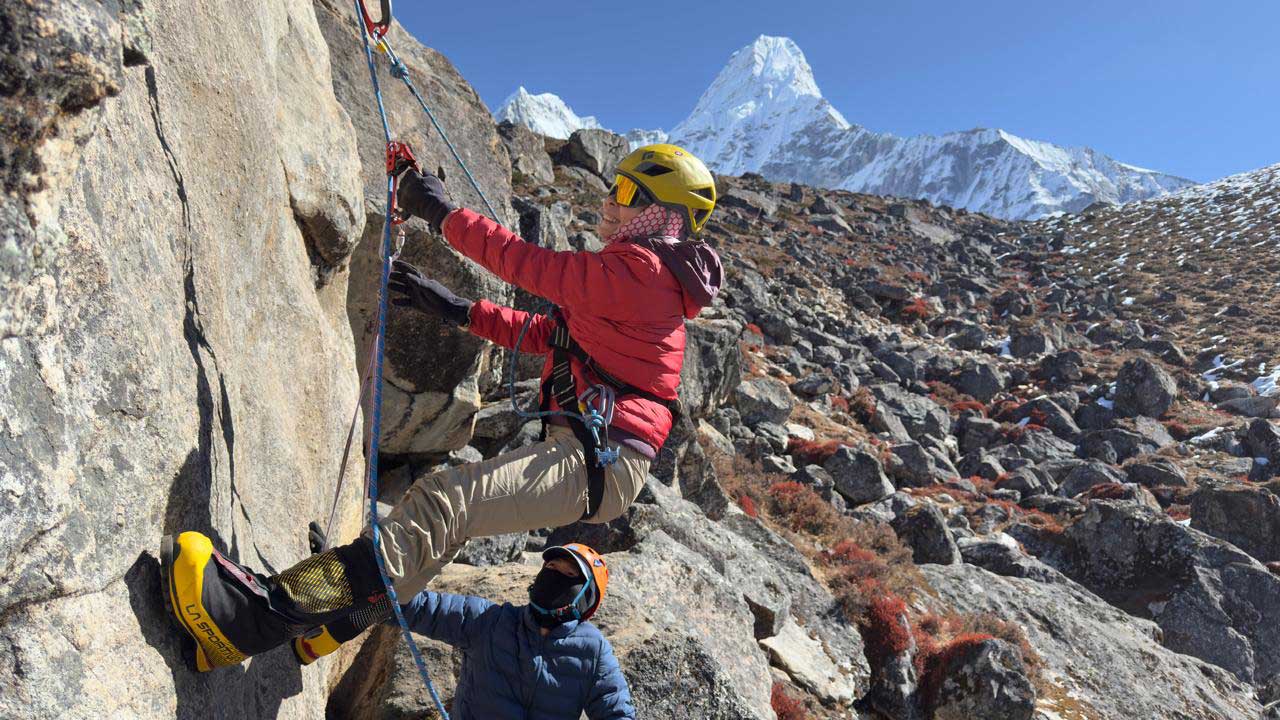
The Southwest Ridge is commonly equipped with fixed ropes, and expedition teams train specifically for ascending and descending fixed lines, rappelling, and transitions before beginning their rotations. A documented Ama Dablam expedition conducted dedicated technical training in these skills at Base Camp.
This means climbers must know how to efficiently use equipment such as:
- Harness
- Ascender/Jumar
- Carabiners
- Safety lanyards
- Descender
- Climbing rope
- Crampons
- Ice axe
But knowing how to use the equipment is only part of the equation.
Efficiency matters during Ama Dablam Expeditions!
On a long summit push, inefficient rope transitions can consume valuable time and energy.
Imagine repeatedly:
- Approaching a fixed line.
- Connecting the ascender.
- Moving upward.
- Passing anchors.
- Managing protection.
- Transitioning between systems.Repeating the process.
At low elevation, mistakes may simply be frustrating.
At 6,000+ meters, mistakes can become exhausting.
That is why serious Ama Dablam expedition training includes repetitive practice until rope transitions become controlled and familiar.
10. Ama Dablam's Popularity Does Not Mean the Mountain Is Predictable
The final hidden fact may be the most important.
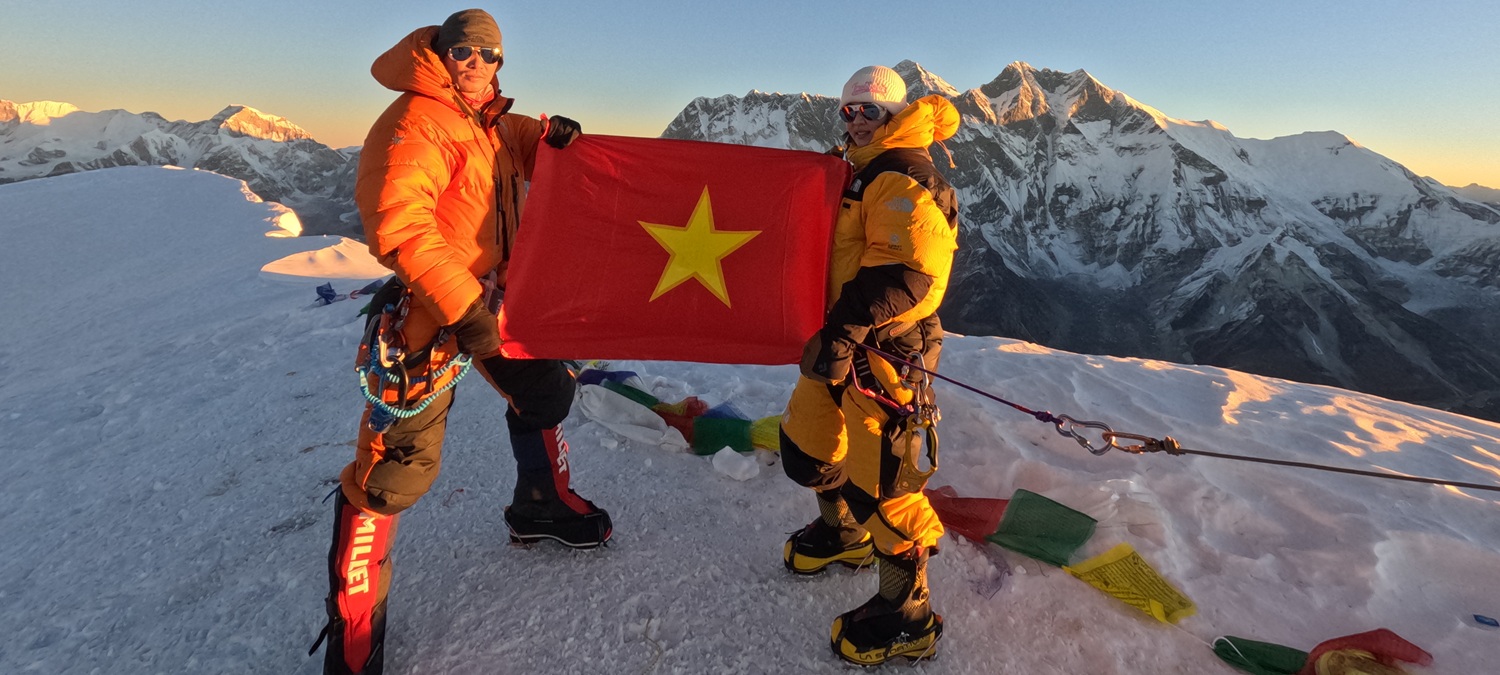
Ama Dablam is increasingly well known internationally. Nepal's official tourism statistics recorded 615 expedition members on Ama Dablam across 55 teams in 2024, illustrating its popularity among permitted mountaineering expeditions.
But popularity should not be confused with predictability.
More climbers mean more logistical infrastructure.
It can also mean more fixed ropes, greater route familiarity, more experienced guides, and a substantial body of accumulated knowledge.
However, the mountain remains exposed to natural variables.
Weather can change.
Wind can increase.
Snow can shift.
Rockfall can occur.
Ice conditions can deteriorate.
Crowding can influence movement.
Fixed ropes can become worn or damaged.
And individual climbers respond differently to altitude.
Therefore, the central skill of a successful Ama Dablam Expedition is not simply determination.
It is judgment.
The summit is only one part of the expedition
A successful expedition begins long before the summit.
It starts with physical preparation.
Then technical training.
Then equipment selection.
Then acclimatization.
Then route assessment.
Then weather analysis.
Then efficient movement.
Then conservative decision-making.
And finally, the summit attempt.
The objective is not simply to stand on 6,812 meters.
The objective is to conduct the entire expedition safely and efficiently.
Ama Dablam Expedition Route: What the Climber Actually Encounters?
For anyone researching the Ama Dablam Expedition route, the standard Southwest Ridge can broadly be understood as a progression from trekking terrain to increasingly technical mountaineering.
The journey commonly begins after reaching the Khumbu through the Lukla–Namche trekking corridor before continuing toward the Ama Dablam Base Camp area.
A representative expedition itinerary can include Kathmandu, Lukla, Monjo, Namche, Debuche, Pangboche, and Ama Dablam Base Camp, followed by acclimatization and technical climbing rotations. One current expedition itinerary places Base Camp at approximately 15,000 feet and then progresses through Camp 1, Camp 2, Camp 2.7, and the summit depending on conditions and strategy.
The route then becomes progressively more technical.
Base Camp
Ama Dablam Base Camp is the principal logistical and acclimatization center. Here teams conduct equipment checks, technical training, puja ceremonies, weather assessment, and preparation for climbing rotations.
Camp 1
Camp 1 sits around the lower section of the Southwest Ridge. From here, the character of the expedition changes dramatically. Climbers leave conventional trekking terrain and begin sustained technical movement.
Camp 2
Camp 2 is reached through exposed rock terrain and the Yellow Tower. Its unusual location makes it one of the most memorable camps on the mountain.
Upper Ridge
Above Camp 2, climbers encounter mixed terrain, steep sections, the Grey Tower area, Mushroom Ridge, and higher snow-and-ice slopes.
Summit
The final climbing terrain involves steep snow and ice around the hanging glacier and upper summit slopes before reaching the summit ridge and top.
The exact route, camp locations, fixed ropes, and climbing tactics can vary according to current mountain conditions.
Why Ama Dablam Is Different From Everest?
A common question in Himalayan mountaineering is:
“If Everest is higher, why is Ama Dablam considered so technical?”
The answer is that mountain difficulty cannot be measured by altitude alone.
Everest's summit is much higher at 8,849 meters, but its standard commercial route has extensive infrastructure and a different terrain profile.
Ama Dablam, at 6,812 meters, has a much stronger technical climbing character on its standard Southwest Ridge.
Its challenge comes from the combination of:
High altitude + technical rock + steep snow + mixed terrain + fixed ropes + exposure + narrow ridges.
This makes the Ama Dablam Expedition particularly attractive to experienced mountaineers who want a serious technical Himalayan objective below the extreme-altitude environment of an 8,000-meter peak.
It can also serve as a major step in a climber's broader Himalayan progression, provided the climber has the required technical and high-altitude experience.
Best Time for Ama Dablam Expedition
The traditional climbing windows in Nepal are generally associated with the major Himalayan climbing seasons, but the precise suitability of a particular period depends on weather, route conditions, permits, expedition logistics, and the operator's current schedule.
Historical American Alpine Club reporting has also discussed seasonal preferences and conditions on Ama Dablam, noting the importance of weather and route conditions rather than treating the mountain as climatically uniform throughout the year.
What Experience Do You Need for Ama Dablam Expedition?
Ama Dablam should not normally be approached as a first-ever technical mountain simply because it is below 7,000 meters.
A suitable climber should ideally have experience with:
- High-altitude trekking
- Crampon use
- Ice axe technique
- Fixed-line climbing
- Rappelling
- Ascender use
- Rock scrambling
- Basic rock climbing
- Snow and ice movement
- High-altitude camping
- Cold-weather expedition systems
- Multi-day mountaineering
- Acclimatization rotations
Previous ascents of peaks such as Mera Peak, Island Peak, Lobuche East, or comparable objectives can provide useful experience, but experience must be evaluated against the actual technical requirements of the Ama Dablam route.
A climber's previous mountain history, technical ability, altitude experience, physical conditioning, and professional assessment should all be considered.
Ama Dablam Expedition Preparation: Physical Training
A strong preparation program should develop several areas rather than concentrating on one form of exercise.
Endurance
Long uphill sessions help prepare the cardiovascular system for sustained movement.
Leg strength
Squats, lunges, step-ups, and loaded uphill walking can help develop the strength required for steep terrain.
Core strength
A strong core improves stability while climbing with a backpack and moving over uneven terrain.
Upper-body strength
Fixed-rope climbing can place significant demands on the upper body, especially during ascents using an ascender.
Balance and movement
Technical climbing is not simply about power. Controlled foot placement and balance are essential.
Load carrying
Training should gradually incorporate a realistic backpack because carrying weight at altitude changes movement efficiency.
Ama Dablam Expedition Gear: The Hidden Importance of Equipment
A technically demanding mountain requires technically appropriate equipment.
A typical equipment system may include:
Climbing helmet: Protection from rock and ice hazards.
Harness: Required for fixed-line and rope systems.
Ascender: Used for ascending fixed ropes.
Descender: Used during rappels.
Crampons: Essential for snow and ice terrain.
Mountaineering boots: Must be compatible with the climbing environment and crampons.
Ice axe: Used for balance and snow/ice movement.
Carabiners and slings: Used as part of the climbing protection system.
Technical gloves: Important because hand dexterity matters while managing rope systems.
Down clothing: Necessary for cold high-altitude environments.
Headlamp: Particularly important because summit movements frequently begin before sunrise.
High-altitude sleeping system: Essential for recovery at exposed camps.
Equipment selection should always be reviewed with an experienced expedition operator or qualified mountain guide because exact requirements vary according to route conditions, season, and expedition style.
Ama Dablam Expedition and the Role of Sherpa Guides
It is impossible to discuss Himalayan expeditions without recognizing the role of experienced Nepali mountain professionals.
High-altitude Sherpa guides contribute far more than physical assistance.
Their knowledge can include:
- Route familiarity
- Rope systems
- Mountain weather
- High-altitude logistics
- Camp organization
- Snow conditions
- Local mountain traditions
- Risk assessment
- Expedition movement
- Emergency response
The mountain's cultural context also makes this relationship particularly meaningful.
The Khumbu is not simply a gateway to a mountain.
It is a living Himalayan region with communities whose history, economy, and culture are deeply connected with the mountains.
A responsible Ama Dablam Expedition in Nepal should therefore respect both the mountain environment and the people who make Himalayan expeditions possible.
Ama Dablam Expedition: 10 Hidden Facts at a Glance
| Hidden Facts | Why It Matters? |
| It is highly technical | Altitude is combined with rock, ice, snow, and exposure. |
| The name has cultural meaning | “Ama Dablam” is connected with the image of a mother's necklace. |
| First ascent was in 1961 | The original climb demonstrated the mountain's serious technical character. |
| Camp 2 is highly exposed | Space is limited and the camp sits on a dramatic rock position. |
| Yellow Tower is a key crux | Technical climbing occurs around 6,000m. |
| Mushroom Ridge is highly exposed | Snow, cornices, wind, and steep drops make conditions important. |
| Camp strategy can change | Higher camps may be modified or bypassed according to conditions. |
| Acclimatization involves rotations | Teams climb higher and return to recover and adapt. |
| Rope skills are essential | Fixed-line movement, rappelling, and transitions require practice. |
| Popularity does not remove risk | Weather and mountain conditions remain unpredictable. |
Final Conclusion: The Real Story Behind an Ama Dablam Expedition
The Ama Dablam Expedition is far more than a journey to the summit of a 6,812-meter Himalayan peak. It is a complete mountaineering experience that combines technical climbing, high-altitude endurance, strategic acclimatization, mountain culture, teamwork, and careful decision-making. From the first steps through the Khumbu Valley to the final ascent of the spectacular Southwest Ridge, every stage of the expedition demands preparation and commitment. Ama Dablam may be famous for its extraordinary pyramid-shaped profile, but its true character is revealed only when climbers move beyond the trekking trails and begin confronting the steep, exposed, and technically demanding terrain of the mountain.
What makes Ama Dablam climbing particularly distinctive is the combination of altitude and technical difficulty. At 6,812 meters, the mountain is considerably lower than Mount Everest, yet climbers encounter challenging rock, snow, ice, fixed ropes, exposed ridges, and rapidly changing mountain conditions. Features such as the Yellow Tower, Camp 2, Mushroom Ridge, and the upper Southwest Ridge transform the expedition into a serious technical mountaineering undertaking. The reduced oxygen available at high altitude adds another layer of difficulty, meaning that climbing efficiency, pacing, acclimatization, and physical conditioning become just as important as technical ability.
The history of Ama Dablam further demonstrates why the mountain has earned such a strong reputation among Himalayan climbers. The successful first ascent in 1961 established the Southwest Ridge as a significant technical route and opened an important chapter in Nepal's mountaineering history. Modern expeditions now benefit from improved climbing equipment, weather forecasting, communication systems, established camps, fixed ropes, professional guides, and decades of accumulated route knowledge. However, technological progress has not removed the fundamental challenges of the mountain. The rock remains steep, the ridges remain exposed, weather can remain unpredictable, and altitude continues to test every climber.
Another important part of the Ama Dablam Expedition in Nepal is its connection with the Sherpa culture of the Khumbu. The name Ama Dablam carries deep cultural symbolism, often interpreted as “Mother's Necklace,” reflecting the mountain's distinctive appearance and its connection to local traditions. Before climbing, many expeditions participate in a traditional puja ceremony, seeking blessings and showing respect for the mountain. This cultural dimension gives the expedition a meaning that extends beyond physical achievement. Climbers are not simply entering a high-altitude environment; they are traveling through a landscape that has profound cultural, spiritual, and historical importance for the communities of the Khumbu.
Successful Ama Dablam climbing also depends heavily on acclimatization. A summit attempt cannot simply be treated as a single push from Base Camp. Climbers generally need carefully planned rotations between Base Camp and the higher camps to allow their bodies to adapt progressively to increasing altitude. These rotations also provide valuable opportunities to become familiar with the route, test equipment, practice fixed-rope techniques, and evaluate individual performance. The ability to recognize how the body responds to altitude is critical because physical strength alone cannot guarantee a successful summit attempt.
The technical nature of the mountain makes preparation particularly important. Climbers planning an Ama Dablam Expedition should be comfortable with crampons, ice axes, harnesses, ascenders, rappelling systems, fixed ropes, and exposed climbing terrain. Previous experience on high-altitude peaks can provide a valuable foundation, but climbers should also understand that Ama Dablam presents a different combination of challenges. The mountain requires the ability to perform technical movements while carrying equipment, dealing with cold temperatures, managing fatigue, and operating at an altitude where physical performance is significantly reduced.
The role of experienced mountain guides and Sherpa professionals is another essential part of the expedition. Their knowledge of the route, weather, climbing systems, camps, logistics, and high-altitude conditions can contribute significantly to expedition planning and safety. Their experience also reflects the deep connection between Himalayan mountaineering and the communities of Nepal. A responsible expedition recognizes this contribution and approaches the mountain with respect for both the environment and the people who make high-altitude climbing possible.
Weather and mountain conditions are equally important. No matter how carefully an expedition is planned, the Himalayas remain dynamic. Snow conditions can change, winds can strengthen, temperatures can fluctuate, and route conditions can evolve throughout the climbing season. Fixed ropes, camp locations, and summit strategies may therefore need to be adjusted according to current conditions. This is why a good Ama Dablam climbing itinerary should be viewed as a strategic framework rather than an inflexible timetable. Experienced expedition teams continuously evaluate weather forecasts, route conditions, climber health, acclimatization, and overall risk before making decisions.
The summit itself is only one moment in the entire Ama Dablam journey. Reaching the top of the mountain can be an extraordinary achievement, but the expedition's real success is built through every stage that comes before it. The training completed months earlier, the acclimatization rotations, the technical practice at Base Camp, the long hours spent moving between camps, the careful management of energy, the decisions made in difficult weather, and the teamwork developed among climbers and guides all contribute to the final outcome. The summit is therefore best understood as the culmination of a much larger process.
For climbers searching for Ama Dablam Expedition 2027, Ama Dablam Expedition 2028, Ama Dablam climbing in Nepal, Ama Dablam Southwest Ridge, Ama Dablam Base Camp, Ama Dablam climbing difficulty, Ama Dablam expedition itinerary, or 6,812m Himalayan peak climbing, the most important lesson is that preparation should extend far beyond physical fitness. Technical skills, high-altitude experience, appropriate equipment, acclimatization strategy, weather awareness, responsible decision-making, and professional expedition support all deserve equal attention. Understanding these elements before arriving in Nepal allows climbers to approach the mountain with realistic expectations and stronger preparation.
Ultimately, the real story behind an Ama Dablam Expedition is not simply about standing on a spectacular summit. It is about learning to move responsibly through one of the world's most demanding mountain environments. Ama Dablam rewards patience rather than rushing, preparation rather than improvisation, teamwork rather than individual ambition, and respect rather than overconfidence. Its iconic shape may attract climbers from around the world, but its technical terrain, altitude, exposure, history, and cultural significance are what make the mountain truly remarkable.
Ama Dablam is beautiful from a distance, technical up close, and unforgettable from the summit. The journey from the Khumbu Valley to 6,812 meters represents a demanding combination of adventure, skill, endurance, culture, and Himalayan experience. For properly prepared climbers, the expedition can become far more than another mountain achievement—it can become a defining chapter in their mountaineering journey and a profound encounter with the high Himalayas of Nepal.