

Ama Dablam Climbing with Lobuche Peak is an exhilarating Himalayan journey that offers a peak climbing experience alongside a technical expedition. In the same trip, in just 24 days, climbers will complete city sightseeing of Kathmandu, trekking to the Sherpa settlements of the Khumbu region, climb Lobuche Peak (6,119 m/20,070 ft), and summit Ama Dablam (6812m/ 22,349 ft) together.
The mighty Himalayan peaks of Ama Dablam and Lobuche await you for your upcoming Nepal journey. This once-in-a-lifetime chance to summit not one but two Nepalese giants will create memories that last forever. Don’t miss out on this implausible chance to attempt them.
Rising majestically to 6,119 meters (20,075 ft) in the heart of the Khumbu, Lobuche Peak stands as the ultimate proving ground for those who dream of the high Himalayas. Located just a stone’s throw from the legendary Everest Base Camp, this iconic peak offers far more than a standard trek; it is a true alpine challenge that serves as the gateway to technical mountaineering. At Ama Dablam Expeditions, we view Lobuche not just as a summit, but as a classroom in the clouds. From its jagged rock ridges to the final, breath-taking push across steep snow slopes, the climb demands grit and focus, rewarding you with an unrivaled 360-degree panorama of Everest, Lhotse, and our namesake, Ama Dablam.
For the 2026 season, we invite you to experience the raw power of the Himalayas on a peak that perfectly balances accessibility with adrenaline. Whether you are using Lobuche as a vital acclimatization step for an 8,000-meter giant or seeking your first 6,000-meter triumph, our Sherpa-led team ensures you aren't just another climber on the mountain—you are a partner in a shared heritage. We provide the technical expertise, the high-altitude safety, and the mountain camaraderie needed to transform a daunting ridge into a lifetime achievement. Step onto the summit of Lobuche with us and see the world from a perspective few ever dare to reach.
Often described as the most beautiful mountain in the world, Ama Dablam (6,812m) is the crown jewel of the Khumbu and the very heart of our identity at Ama Dablam Expeditions. Known as the "Mother’s Necklace," its soaring ridges and iconic hanging glacier offer a masterclass in technical Himalayan climbing.
This is not just a trek to a high point; it is a vertical journey through steep granite, intricate ice towers, and exposed ridges that demand respect and skill. We invite you to move beyond the crowded trails and test your spirit on the mountain that define's a climber’s career—an expedition where every pitch brings you closer to a summit that feels like the very edge of the sky.
Standing on the summit of Ama Dablam provides an intimate, eye-level view of Everest and Lhotse that few ever witness. At Ama Dablam Expeditions, our connection to this peak is deeply personal; it is our backyard and our namesake. We provide a world-class experience that blends elite Sherpa guidance with a high-camp setup designed for maximum recovery and safety.
We are committed to helping you navigate the technical "Yellow Tower" and the "Grey Tower" with the precision and care that only a local, heritage-led team can offer. Join us to transform your mountaineering ambitions into a legendary reality on the most aesthetic spire in the Himalayas.
The expedition begins the moment you land at Kathmandu’s Tribhuvan International Airport, where the bustling energy of Nepal's capital serves as your launchpad. The true mountain journey commences with an exhilarating 35-minute flight to the iconic airstrip at Lukla (2,840m). From here, the route follows the Dudh Koshi river valley, traversing charming Sherpa villages to reach Phakding, then ascending the challenging yet rewarding hill to Namche Bazaar (3,440m), the vibrant commercial hub of the Khumbu region. A vital acclimatization day in Namche is spent hiking above the village for a first glimpse of Everest and Ama Dablam, ensuring our bodies adjust to the decreasing oxygen levels before venturing higher into the Himalayas.
Continuing the ascent, the trail leads through rhododendron and pine forests to Tengboche, a spiritual heart of the region known for its magnificent monastery and panoramic mountain views. We proceed through the high-altitude landscapes to Dingboche (4,410m), where a second strategic acclimatization day prepares us for the thin air above 5,000 meters. The journey then takes us along the glacial moraine to Lobuche (4,910m), the final staging post before establishing Lobuche Peak High Camp. From here, climbers launch their pre-dawn summit push for Lobuche East (6,119m), reaching a pinnacle that offers extraordinary views of the surrounding giants before descending to the lower elevation of Pheriche.
Having successfully summited Lobuche, the expedition shifts focus and drops down to the legendary Ama Dablam Base Camp (4,570m). This beautiful, pristine camp is where we establish our mountain home. We spend time here resting, conducting a traditional puja ceremony for safe passage, and strategically climbing the technical route to Camp I (5,700m) and Camp II (6,000m). The final push to the summit of Ama Dablam (6,812m) is a serious alpine challenge, requiring navigation of steep snow and rock sections. After the arduous climb and descent back to Base Camp, the return journey is a swift trek back through Namche Bazaar to Lukla for the flight back to the comfort of Kathmandu, concluding an unparalleled Himalayan traverse.
Day 1: Arrival in Kathmandu and Transfer to the Hotel [1,338 m/4,390 ft]
Day 2: Fly to Lukla [2,840m/9,316ft] and trek to Phakding [2,610m/8,561ft]: a 35 -minute flight and a 3 to 4 hours trek
Day 3: Trek Phakding to Namche Bazaar [3,440m/11,284ft]: 6 to 7 hours trek
Day 4: Namche Bazaar: Acclimatization Day [3,440m/11,284ft]
Day 5: Trek from Namche Bazaar to Tengboche [3,860m/12,661ft]: 5 to 6 hours trek
Day 6: Trek Tengboche to Dingboche [4,410m/14,469ft]: 5 to 6 hours trek
Day 7: Dingboche: Acclimatization Day [4,410m/14,465ft]
Day 8: Trek Dingboche to Lobuche [4,910m/16,105ft]: 5 to 6 hours trek
Day 9: Trek Lobuche to Lobuche Peak High Camp [5,400m/17,712ft]: 3 to 4hours
Day 10: Climb Lobuche High Camp to Lobuche East Summit [6119m/20,070 ft] and back to Pheriche [4,371 m /14,340 ft]: 8 to 10 hours
Day 11: Contingency Day [Due to Bad Weather, Acclimatization, Health Conditions, etc.]
Day 12: Trek Pheriche to Ama Dablam Base Camp [4,371 m /14,340 ft]: 5-6hours
Day 13: Rest day and a worship ceremony at Ama Dablam Base Camp [4,570m/14,994ft]
Day 14: Climb to Ama Dablam Camp I [5,700m/18,700ft]
Day 15: Climb to Amadablam Camp II [6,000m/19,685ft]
Day 16: Early night summit push [6,812m / 22,349ft] and back to Camp II [6,000m/19,685ft]
Days 17-18: Contingency Days [Due to Bad Weather, Acclimatization, Health Conditions, etc.]
Day 19: Trek back to Ama Dablam Base Camp [4,570m/14,994ft]
Day 20: Trek Ama Dablam Base Camp to Namche Bazaar [3,440 m/11,283 ft]: 7-8 hours
Day 21: Trek Namche Bazaar to Lukla [2,860 m/9384 ft]
Day 22: Fly back to Kathmandu [1338m/4390ft]
Day 23: Rest Day in Kathmandu [1338m/4390ft]
Day 24: International Flight [Final Departure]
Upon arrival in Kathmandu, the vibrant capital of Nepal, you will be warmly welcomed by a representative of Ama Dablam Expeditions. After completing immigration and baggage formalities at Tribhuvan International Airport, our team will assist you with a smooth transfer to your hotel. As you drive through the lively streets, you will catch your first glimpse of the city’s unique blend of ancient temples, colorful markets, and modern life set against a Himalayan backdrop. Sitting at an altitude of 1,338 meters (4,390 feet), Kathmandu offers a gentle introduction to Nepal and its rich cultural atmosphere.
Once you reach your hotel, you can relax and recover from your journey in a comfortable and peaceful setting. This day is kept light to help you adjust to the new environment and time zone. You may choose to rest, enjoy a warm meal, or take a short walk around the neighborhood to experience the local lifestyle. Our team from Ama Dablam Expeditions will be available to assist you and provide any necessary information, ensuring you feel well-prepared and at ease as your Himalayan adventure begins.
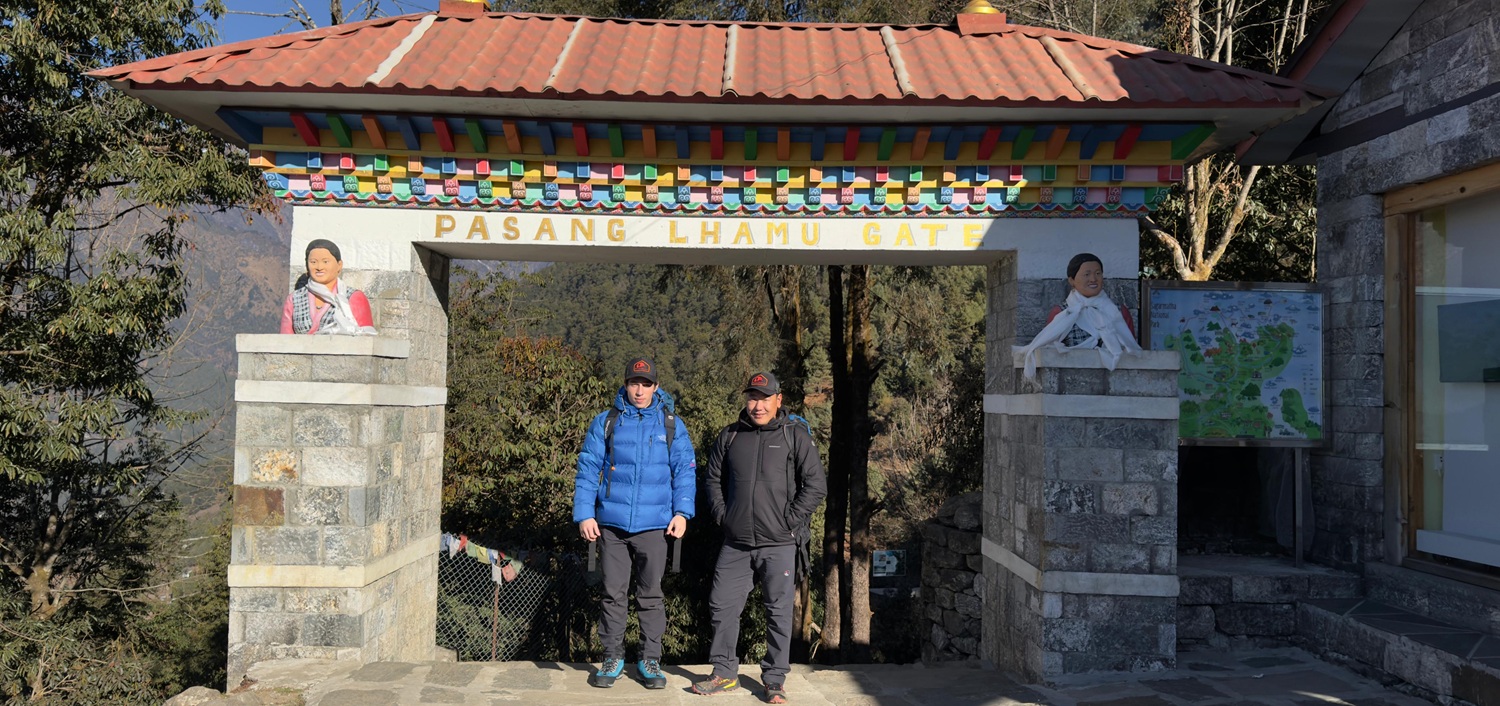
Early in the morning, you will fly from Kathmandu to Lukla on a scenic 35-minute mountain flight, offering breathtaking views of rolling hills and snow-capped Himalayan peaks. Upon landing at Lukla Airport (2,840 m/9,316 ft), often considered one of the most thrilling airports in the world, you will meet the trekking crew and make final preparations before starting your journey on foot. The fresh mountain air and lively atmosphere of Lukla set an exciting tone for the days ahead.
From Lukla, the trek begins with a gentle descent along a well-marked trail, passing through charming Sherpa villages, mani walls, and prayer wheels. You will walk alongside the Dudh Koshi River, crossing suspension bridges adorned with colorful prayer flags. After a comfortable 3 to 4 hours of trekking, you will reach Phakding (2,610 m/8,561 ft), a peaceful riverside village. Here, you can relax at the teahouse, enjoy a warm meal, and rest well, allowing your body to begin the acclimatization process for the higher altitudes to come.
Note: If your flight is scheduled from Manthali during the peak seasons (Spring and Autumn), we will transfer you there early in the morning, starting the journey from Kathmandu at midnight or so to reach Lukla on time.
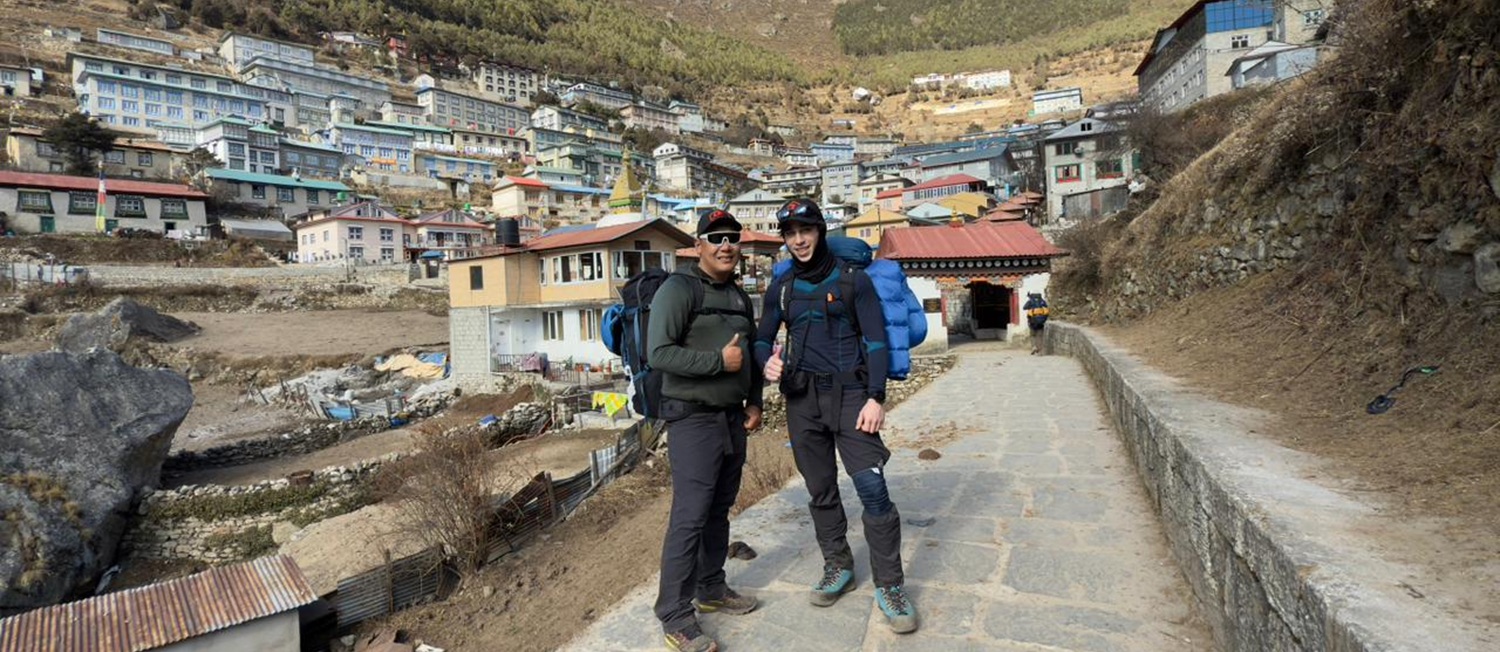
The trek from Phakding to Namche Bazaar (3,440 m / 11,284 ft) is one of the most exciting and memorable days of the journey, as it takes you deeper into the heart of the Khumbu region. After an early breakfast in Phakding, the trail follows the roaring Dudh Koshi River, crossing several high suspension bridges decorated with colorful prayer flags. Along the way, you will pass through small Sherpa villages such as Benkar and Monjo, where you can observe traditional stone houses, spinning prayer wheels, and local life shaped by the mountains. This part of the trek is mostly gentle, allowing you to enjoy the lush forests of pine and rhododendron while gradually gaining altitude.
After entering Sagarmatha National Park at Monjo, the trail becomes more adventurous. You will continue through forests and cross the famous Hillary Suspension Bridge, one of the highest and most iconic bridges in the Everest region. From here, the path climbs steadily uphill, testing your stamina but rewarding you with breathtaking mountain scenery. On a clear day, you may catch your first glimpse of Mount Everest, a truly unforgettable moment for many trekkers. After a challenging yet fulfilling 6 to 7 hours of trekking, you will finally reach Namche Bazaar, the vibrant Sherpa capital of the Khumbu. Surrounded by towering peaks, Namche offers cozy lodges, bakeries, shops, and stunning viewpoints, making it the perfect place to rest, acclimatize, and prepare for the higher trails ahead.
This day is dedicated to proper acclimatization at Namche Bazaar, an essential step for a safe and successful trek in the Everest region. Instead of complete rest, you will take short and gentle hikes to help your body adjust to the higher altitude. After breakfast, you may hike to the Everest View Hotel, one of the best viewpoints in the region, offering stunning panoramic views of Mount Everest, Lhotse, Ama Dablam, and Thamserku. The walk is gradual and rewarding, allowing you to gain altitude during the day and return to Namche to sleep at a lower elevation, following the golden rule of acclimatization: climb high, sleep low.
After the hike, you will have time to explore Namche Bazaar, the cultural and commercial hub of the Khumbu region. You can visit the Sherpa Museum and Sagarmatha National Park Visitor Center to learn about local culture, mountaineering history, and the region’s unique environment. In the afternoon, relax at a café, browse trekking shops, or simply enjoy the mountain views surrounding the town. This acclimatization day not only helps your body adapt to the altitude but also gives you a chance to fully experience the charm and energy of Namche Bazaar before continuing higher into the Himalayas.
The trek from Namche Bazaar to Tengboche (3,860 m / 12,661 ft) is one of the most scenic and spiritually enriching days of the journey in the Everest region. After leaving Namche, the trail follows a beautiful contour path high above the Dudh Koshi River, offering spectacular views of Ama Dablam, Everest, Lhotse, Nuptse, and Thamserku. The walk begins gently, allowing you to enjoy the fresh mountain air, pine and rhododendron forests, and the peaceful rhythm of trekking in the Himalayas. Along the way, you will pass small settlements like Kyangjuma, where the panoramic mountain scenery invites short breaks and photographs.
As the trail continues, it descends to Phunki Tenga for lunch, before beginning a steady uphill climb through dense forest toward Tengboche. This ascent is gradual but demanding, especially as the altitude increases. After 5 to 6 hours of trekking, you will arrive at Tengboche, home to the famous Tengboche Monastery, the largest and most important Buddhist monastery in the Khumbu region. Surrounded by towering Himalayan peaks, the monastery offers a peaceful and spiritual atmosphere. In the evening, you may attend a prayer ceremony, listen to chanting monks, and enjoy breathtaking sunset views over Ama Dablam, making this day both physically rewarding and deeply memorable.
The trek from Tengboche to Dingboche (4,410 m / 14,469 ft) takes you deeper into the high alpine landscapes of the Everest region, where the terrain becomes more open and dramatic. After an early morning in Tengboche, with beautiful views of Ama Dablam glowing in the sunlight, the trail descends gently through rhododendron and pine forests to Debuche. From here, you will cross the Imja Khola River and continue toward Pangboche, one of the oldest Sherpa villages in the Khumbu. The path offers close-up views of Ama Dablam’s soaring south face, making this section especially rewarding for photographers and mountain lovers.
Beyond Pangboche, the scenery changes as trees give way to alpine shrubs and wide valleys. The trail gradually climbs past Somare, with stone-walled fields and yak pastures lining the route. As altitude increases, the air becomes thinner, so the pace is slow and steady. After 5 to 6 hours of trekking, you will reach Dingboche, a beautiful high-altitude village set in the Imja Valley and surrounded by towering peaks such as Lhotse, Island Peak, and Ama Dablam. Dingboche is an important acclimatization stop, offering stunning mountain views, cozy teahouses, and a peaceful environment to rest and prepare for the higher elevations ahead.
This acclimatization day in Dingboche is vital for helping your body adjust to the higher altitude before continuing further into the Everest region. After breakfast, you will take a short but rewarding hike to nearby viewpoints such as Nangkartshang Peak or the ridge above the village. The gradual climb offers stunning panoramic views of Ama Dablam, Lhotse, Makalu, Island Peak, and the Imja Valley. The hike is designed to gain altitude during the day and return to Dingboche for rest, supporting safe and effective acclimatization.
In the afternoon, you will have time to relax and explore the village. Dingboche is known for its stone-walled fields that protect crops from cold winds and grazing yaks, giving insight into high-altitude Sherpa life. You may enjoy a warm meal at the teahouse, read, or simply take in the dramatic Himalayan surroundings. This rest day allows your body to recover, reduces the risk of altitude sickness, and prepares you physically and mentally for the challenging yet rewarding trekking days ahead.
The trek from Dingboche to Lobuche (4,910 m / 16,105 ft) is a challenging yet deeply moving day as you approach the high alpine zone of the Everest region. After leaving Dingboche, the trail gradually climbs through the wide and scenic Khumbu Valley, with spectacular views of Taboche, Cholatse, and Ama Dablam fading behind you. The landscape becomes more rugged and barren, reflecting the increasing altitude. Walking at a slow and steady pace is essential, allowing your body to adapt while you take in the raw beauty of the Himalayas.
After passing Dughla (Thukla), the trail steeply ascends to the Thukla Pass, where you will find memorials dedicated to climbers who lost their lives on Everest and surrounding peaks. This emotional and humbling place offers time for reflection against a backdrop of towering ice-covered mountains. From the pass, the trail eases and follows the edge of the Khumbu Glacier, leading you to the small settlement of Lobuche. After 5 to 6 hours of trekking, you will arrive at this high-altitude village, where you can rest, enjoy a warm meal, and prepare for the exciting days ahead as you move closer to Everest Base Camp.
Today marks the transition from trekking to true mountaineering as you leave Lobuche and head toward Lobuche Peak High Camp. After breakfast, the trail gradually climbs away from the main trekking route, moving onto rocky and glacial terrain. The surroundings feel more remote and rugged, with dramatic views of the Khumbu Glacier, Nuptse, and surrounding peaks dominating the landscape. The air is thinner here, so the pace remains slow and steady, with frequent breaks to conserve energy and stay well acclimatized.
After 3 to 4 hours of careful ascent, you will arrive at Lobuche Peak High Camp, perched high above the valley. The camp offers stunning panoramic views and a true high-altitude atmosphere. Upon arrival, the climbing team will help you settle in, followed by a short briefing on summit plans, route conditions, and safety procedures. The rest of the day is dedicated to resting, hydrating, and mentally preparing for the summit push ahead. As night falls, surrounded by towering Himalayan giants and a sky full of stars, excitement builds for the challenging and rewarding climb to come.
Today is a long, demanding, and highly rewarding day as you attempt the Lobuche East Summit. The climb begins very early in the morning, often before dawn, under the guidance of experienced Sherpa climbing leaders. Using fixed ropes where necessary, you will ascend over rocky sections, snow slopes, and icy ridges. As the first light of day touches the Himalayas, breathtaking views unfold around you, with Mount Everest, Lhotse, Nuptse, Makalu, and Ama Dablam rising majestically in the distance. Reaching the summit at 6,119 meters (20,070 ft) is a proud achievement, offering an unforgettable sense of accomplishment and panoramic Himalayan scenery.
After spending some time on the summit for photographs and quiet reflection, you will carefully descend back to High Camp, then continue down to Pheriche. The long descent is physically tiring but helps with rapid acclimatization as you lose significant altitude. After 8 to 10 hours of effort, you will arrive in Pheriche, where you can finally relax, enjoy a warm meal, and rest well. This day stands out as one of the most memorable highlights of the expedition, combining challenge, adventure, and the true spirit of Himalayan mountaineering.
This day is kept as a buffer or contingency day to ensure the overall success and safety of the expedition. In the high Himalayas, weather conditions can change quickly, and factors such as strong winds, snowfall, or low visibility may require adjustments to the climbing schedule. This extra day allows flexibility in case the summit attempt needs to be delayed due to unfavorable weather.
The contingency day may also be used for additional acclimatization, rest, or recovery if any team member feels unwell or needs more time to adapt to the altitude. If everything goes according to plan, this day can be used for rest, light walks around the area, equipment checks, or simply relaxing and enjoying the mountain surroundings. Keeping a contingency day is a key part of responsible mountaineering, helping to maximize safety while increasing the chances of a successful and enjoyable expedition.
Today marks an exciting stage of the expedition as you trek from Pheriche to Ama Dablam Base Camp, the starting point for your Ama Dablam climb. The trail gradually ascends through the Imja Khola Valley, passing through high-altitude alpine terrain, yak pastures, and the occasional glacial moraine. Along the way, you will enjoy spectacular views of Ama Dablam, Lhotse, Island Peak, and the surrounding Himalayan giants, with the air becoming crisper and the scenery more rugged as you approach the base camp.
After 5 to 6 hours of trekking, you will arrive at Ama Dablam Base Camp (4,371 m / 14,340 ft), a remote and peaceful spot surrounded by towering peaks. Here, your climbing team will help you settle in and set up camp. The rest of the day is spent resting, hydrating, and organizing climbing gear while taking in the breathtaking views. This day allows you to acclimatize further and mentally prepare for the challenging and rewarding ascent that lies ahead on Ama Dablam.
This day is reserved for rest, acclimatization, and spiritual preparation at Ama Dablam Base Camp, set beneath the dramatic south face of the mountain. After several demanding days of trekking and climbing, this rest day allows your body to recover and adapt to the altitude. You may take short walks around the base camp, practice basic climbing techniques, or simply relax while enjoying the breathtaking surroundings of ice, rock, and towering Himalayan peaks.
A special highlight of the day is the traditional Buddhist Puja (worship) ceremony, performed by a Lama or senior Sherpa. During the ceremony, climbing equipment, ropes, ice axes, and helmets are blessed, and prayers are offered for a safe and successful summit. Colorful prayer flags are raised, creating a peaceful and meaningful atmosphere. This spiritual ritual is an important Himalayan tradition, strengthening team spirit and confidence as you prepare for the technical and challenging ascent of Ama Dablam in the days ahead.
Today you begin the technical phase of the Ama Dablam expedition, leaving Base Camp and climbing toward Camp I. The route ascends steeply along rocky ridges and exposed sections, requiring careful movement and the use of fixed ropes. As you gain altitude, the views become increasingly dramatic, with the Imja Valley stretching far below and peaks such as Lhotse, Island Peak, and Everest visible in the distance. The climb demands focus, steady pacing, and teamwork as you navigate mixed terrain of rock and snow.
After several hours of challenging ascent, you will reach Ama Dablam Camp I, located at 5,700 meters (18,700 ft) on a narrow and spectacular perch. The camp offers breathtaking panoramic views but limited space, emphasizing the seriousness of the climb ahead. Once settled, the team will rest, hydrate, and review plans for the next stage of the ascent. This day is both physically and mentally demanding, marking a major milestone as you move higher onto one of the world’s most beautiful and technical Himalayan peaks.
Today’s climb from Camp I to Camp II is one of the most technical and exposed sections of the Ama Dablam expedition. Leaving Camp I early, you will traverse narrow ridges and climb steep rock and ice sections, often using fixed ropes for safety. The route follows the famous Ama Dablam ridge system, offering dramatic exposure on both sides and requiring careful, confident movement. With every step, the sense of height and scale increases, making this climb both challenging and incredibly rewarding.
After several hours of focused climbing, you will reach Ama Dablam Camp II, located at 6,000 meters (19,685 ft) on a small but well-positioned ledge just below the hanging glacier. From here, the views are truly breathtaking, with Everest, Lhotse, Makalu, and the Khumbu Valley spread out far below. Once at camp, the priority is rest, hydration, and preparation for the summit push ahead. This is a critical point of the expedition, where mental strength, physical endurance, and teamwork come together as you get ready for the final ascent of Ama Dablam.
Today is the most important and challenging day of the expedition—the Ama Dablam summit day. You will wake up late at night and begin the climb in the early hours, using headlamps to guide your way along the narrow ridges and steep ice sections above Camp II. The route demands full concentration, with fixed ropes, exposed traverses, and the famous Mushroom Ridge requiring steady, confident movement. As you climb higher, the cold intensifies and the air becomes extremely thin, making every step a test of endurance and determination.
Reaching the summit of Ama Dablam (6,812 m / 22,349 ft) is an unforgettable achievement. As the first light of dawn spreads across the Himalayas, you are rewarded with breathtaking 360-degree views of Everest, Lhotse, Makalu, Cho Oyu, and countless surrounding peaks. After spending a short but meaningful time on the summit, you will carefully descend along the same route back to Camp II. The descent requires patience and focus, but returning safely to camp brings a deep sense of relief and accomplishment, marking the successful completion of one of the world’s most iconic and technical Himalayan climbs.
This day is kept as an essential contingency or buffer day to ensure the safety and success of the Ama Dablam expedition. In the high Himalayas, weather conditions can change rapidly, with strong winds, snowfall, or poor visibility potentially affecting climbing plans. This extra day provides flexibility to delay the summit push or adjust the schedule if conditions are not favorable.
The contingency day may also be used for additional acclimatization, rest, or recovery if any team member experiences fatigue or altitude-related issues. If the expedition is progressing smoothly, the day can be spent resting at camp, checking and reorganizing equipment, or preparing mentally and physically for the next stage. Including contingency days is a vital part of responsible high-altitude mountaineering, helping to maximize safety while improving the chances of a successful and well-managed climb.
This extra contingency day is included to further enhance the safety and flexibility of the expedition. In extreme high-altitude environments like Ama Dablam, unexpected challenges such as prolonged bad weather, strong summit winds, heavy snowfall, or slower-than-expected acclimatization can arise. Having an additional buffer day allows the team to make wise decisions without feeling rushed, which is crucial for safe mountaineering.
This day may also be used for extra rest, health monitoring, or a rescheduled summit attempt if conditions were not ideal on the planned day. For climbers, it offers valuable time to regain strength, adjust to altitude, and ensure all equipment and logistics are in optimal condition. If everything progresses smoothly, the day can be spent resting at camp and enjoying the remarkable Himalayan surroundings. Including multiple contingency days reflects a professional and safety-first approach to high-altitude expeditions.
Today you begin the careful descent from Ama Dablam Camp II back to Ama Dablam Base Camp, retracing the technical route along exposed ridges and steep sections. Using fixed ropes and maintaining steady coordination with your climbing team, you will descend past Camp I, gradually leaving the high, icy terrain behind. Although descending is physically less demanding than climbing, it requires strong focus and caution, especially on narrow ridgelines and rocky sections.
As you lose altitude, the air becomes richer and breathing easier, bringing a sense of relief and accomplishment after the intense summit phase. After several hours of controlled descent, you will arrive back at Ama Dablam Base Camp (4,570 m / 14,994 ft), where a warm welcome, hot meals, and well-earned rest await. This return marks the successful completion of the technical climbing section of the expedition and offers time to reflect on the achievement while enjoying the peaceful mountain surroundings.
Today’s trek takes you back from the high alpine environment of Ama Dablam Base Camp to the lively Sherpa town of Namche Bazaar. The trail descends gradually through the Imja and Dudh Koshi valleys, offering easier walking as you lose altitude. Along the way, you will pass through familiar villages such as Pangboche and Tengboche, walking through rhododendron and pine forests with prayer flags fluttering overhead. The warmer air and greener landscape feel refreshing after days spent in the rugged high mountains.
Although the trek is long, the improved oxygen levels make the 7 to 8 hours of walking more comfortable and enjoyable. As you approach Namche Bazaar, the sight of colorful houses, bakeries, cafés, and bustling markets brings a sense of return to civilization. Reaching Namche, you can relax in a comfortable lodge, enjoy a hot shower, and celebrate the success of your Ama Dablam climb while reflecting on the unforgettable journey through the heart of the Himalayas.
Today marks the final day of trekking as you descend from Namche Bazaar back to Lukla, completing the return journey through the stunning Khumbu region. The trail gradually winds downhill through Sherpa villages, suspension bridges, and pine forests, offering a relaxing pace compared to the earlier high-altitude climbs. Along the way, you can enjoy scenic views of Ama Dablam, Thamserku, and other surrounding peaks, now from a lower and more comfortable altitude.
As you approach Lukla, the bustling small town feels welcoming, with its charming lodges, shops, and airstrip serving as a gateway back to Kathmandu. Upon arrival, you can relax, celebrate the completion of the trek, and reflect on the incredible journey through the Everest region. This final trekking day is both a moment of accomplishment and a chance to savor the beauty of the Himalayas one last time before the flight back to the capital.
After an unforgettable trek through the Everest region, you will take an early morning flight from Lukla back to Kathmandu, offering one last spectacular aerial view of the Himalayas. The 35- to 40-minute flight provides breathtaking perspectives of snow-capped peaks, deep valleys, and the winding trails you recently traversed. As you approach Tribhuvan International Airport, the bustling capital comes into view, signaling the transition from the remote mountains back to city life.
Upon landing, you will be transferred to your hotel, where you can rest and freshen up. The remainder of the day is free to relax, explore Kathmandu’s vibrant streets, enjoy local cuisine, or reflect on the incredible experiences of your Himalayan adventure. This flight not only brings you safely back to Kathmandu but also offers a final chance to marvel at the stunning landscapes that make Nepal one of the world’s most remarkable trekking destinations.
After weeks of trekking and climbing in the high Himalayas, today is a well-earned rest day in Kathmandu, allowing you to relax, recover, and reflect on your incredible journey. You can enjoy the comforts of your hotel, take a leisurely stroll through the city, or explore nearby attractions at a relaxed pace. The bustling streets of Kathmandu, with their colorful markets, ancient temples, and lively culture, provide a perfect contrast to the serene and remote mountains you’ve just experienced.
This day also offers the opportunity to shop for souvenirs, try local Nepali cuisine, or simply unwind before your international departure. It is a moment to celebrate your achievements, share stories with fellow trekkers, and savor the memories of your expedition. Whether resting quietly or enjoying the vibrant city life, this day ensures you return home rejuvenated and filled with lasting Himalayan memories.
Today marks the conclusion of your unforgettable Himalayan adventure as you prepare for your international departure from Kathmandu. After check-out from your hotel, you will be transferred to Tribhuvan International Airport, where you will complete departure formalities and board your flight home. The journey back offers time to reflect on the remarkable experiences of trekking through the Everest region, summiting Lobuche East, and climbing Ama Dablam—memories that will last a lifetime.
As the plane lifts off, the majestic Himalayan peaks fade into the distance, leaving you with a profound sense of accomplishment and awe. Whether sharing stories with fellow travelers or simply gazing at the clouds below, this final flight marks the end of a challenging, inspiring, and deeply rewarding expedition. From the towering mountains to the vibrant streets of Kathmandu, every moment of your journey will remain etched in your heart forever.

On the treks from Lukla this is one of the first majestic mountains you encounter. Said to be the most beautiful, and certainly is compared to Everest. We did our trek with Amadablam Expeditions, which we all rate the fullest.
Technical equipment provided: fixed ropes, carabiners, high-altitude tents. Personal gear checklist (rentals available):
Technical Climbing Equipment
Footwear
Clothing & Layering
Lightweight liner gloves
Bags & Storage
Sleeping & Camping
Hydration & Food
Electronics
Personal Medical & Safety
Documents & Essentials
The most critical items include high-altitude boots, crampons, harness, helmet, ice axe, ascender, descender, technical gloves, glacier glasses, goggles, down suit, expedition parka, sleeping bag and reliable climbing layers.
Note: Equipment supplied by the expedition company can vary. Confirm which technical and group equipment is provided before purchasing or renting your gear.
Ama Dablam Expedition is regarded as one of the most prestigious and technically rewarding climbing ventures in the Himalayas. Standing at 6,812 meters in the heart of the Khumbu region, Ama Dablam is admired not only for its height but also for its striking beauty and challenging structure. The mountain’s name, meaning “Mother’s Necklace,” reflects its hanging glacier that resembles a sacred ornament worn by Sherpa women. Often called the “Matterhorn of the Himalayas,” Ama Dablam attracts experienced climbers from around the world who seek a combination of adventure, skill, and aesthetic satisfaction. The expedition usually begins with a classic trek through the Everest region, passing through culturally rich Sherpa villages such as Namche Bazaar, Pangboche, and Dingboche, which allows climbers to acclimatize gradually while experiencing Himalayan culture, monasteries, and breathtaking landscapes.
From a climbing perspective, the Ama Dablam Expedition is renowned for its technical difficulty, requiring a high level of physical fitness, mental strength, and mountaineering experience. The normal route follows the Southwest Ridge, which involves steep rock sections, narrow exposed ridges, and snow and ice climbing that require the use of fixed ropes and advanced climbing techniques. Climbers set up a series of camps to ensure proper acclimatization and safety before attempting the summit push. Although the mountain is not among the highest eight-thousanders, its technical nature makes it one of the most challenging peaks in Nepal. Successfully reaching the summit of Ama Dablam offers climbers an immense sense of achievement along with spectacular panoramic views of Everest, Lhotse, Makalu, and the surrounding Himalayan giants, making the expedition a truly unforgettable experience.