The Rapid Ama Dablam Expedition is a meticulously designed climbing program created for experienced alpinists who seek a fast, efficient, and professionally supported ascent of one of the world’s most iconic Himalayan peaks. Rising to 6,812 meters, Ama Dablam is renowned for its striking beauty, technical ridges, steep ice faces, and exposed sections that demand strong mountaineering skills. This rapid expedition minimizes unnecessary acclimatization days while maintaining safety, allowing climbers to achieve the summit within a shorter timeframe without compromising essential preparation. It is ideal for climbers with prior 6,000–7,000 meter experience who are physically fit, technically competent, and time-conscious.
Ama Dablam Expeditions places strong emphasis on strategic acclimatization and efficient logistics. The itinerary is carefully structured with planned rotations to Camp I and Camp II, allowing climbers to adapt to altitude while avoiding prolonged stays that can drain energy. Fixed ropes are professionally installed on technical sections such as the Yellow Tower, Grey Tower, and mushroom ridge, ensuring smoother movement and enhanced safety. Our team closely monitors weather windows and climber condition, enabling swift decision-making for summit pushes. This focused approach significantly increases the chances of success within a limited expedition period.
Safety and professionalism are the core pillars of this rapid expedition. Climbers are supported by highly experienced IFMGA-trained or veteran Nepali Sherpa guides, many of whom have summited Ama Dablam multiple times. The expedition is equipped with comprehensive safety measures, including high-quality climbing gear, satellite communication, medical kits, and emergency evacuation planning. Each climber receives personalized attention, rope management support, and guidance on technical sections, making the climb efficient yet secure. Despite the rapid nature of the expedition, no compromises are made on risk management or ethical mountaineering practices.
The expedition also offers a well-organized base camp and high-camp experience, ensuring comfort and functionality in a demanding alpine environment. Ama Dablam Base Camp is set up with spacious dining tents, sleeping tents, nutritious meals, and proper sanitation facilities to help climbers rest and recover effectively. At higher camps, lightweight yet reliable equipment is used to support quick movements and reduced load carries. Our logistics team ensures timely supply rotations, optimal camp placement, and efficient coordination between base camp and climbing teams.
Overall, the Rapid Ama Dablam Expedition by Ama Dablam Expeditions is a perfect blend of speed, skill, and safety. It is designed for climbers who value precision planning, expert leadership, and high success rates within a shorter expedition window. Beyond the summit, the journey offers breathtaking views of Everest, Lhotse, Makalu, and the Khumbu Valley, making the experience both technically rewarding and visually unforgettable. With a strong commitment to excellence and climber satisfaction, Ama Dablam Expeditions delivers a world-class rapid ascent of one of the Himalaya’s most legendary peaks.
Ama Dablam Summit – 6,812m: Attempt the summit of one of Nepal’s most iconic and technically challenging Himalayan peaks.
20-Day Rapid Expedition: A compact expedition itinerary designed for experienced climbers who want an efficient Ama Dablam climbing program.
Experienced Climber Focus: Suitable for climbers with previous high-altitude and technical mountaineering experience.
Strategic Acclimatization: A focused acclimatization schedule helps climbers prepare for the demanding conditions at extreme altitude.
Classic Southwest Ridge: Ascend Ama Dablam through the famous Southwest Ridge, featuring steep, exposed and technical terrain.
Yellow Tower & Mushroom Ridge: Tackle some of the mountain’s renowned technical climbing sections using fixed ropes and professional climbing techniques.
Camp I – 5,700m: Climb to Camp I and experience the exposed high-altitude terrain of Ama Dablam.
Camp II – 6,000m: Reach Camp II before preparing for the final summit push toward 6,812m.
Technical Climbing Training: Refresh essential skills including fixed-rope climbing, Jumar ascending, rappelling and safe movement on technical terrain.
Traditional Puja Ceremony: Participate in a traditional Sherpa blessing ceremony at Base Camp before beginning the main ascent.
Weather-Based Summit Strategy: Summit attempts are planned around suitable weather conditions, climber readiness and mountain conditions.
Professional Sherpa Support: Receive guidance and high-altitude support from experienced Sherpa climbing professionals.
Expedition Safety & Communication: Benefit from organized climbing support, communication systems, medical preparedness and emergency planning.
Khumbu Valley Journey: Trek through spectacular Himalayan settlements including Lukla, Phakding, Namche Bazaar, Tengboche and Pangboche.
Spectacular Himalayan Scenery: Enjoy breathtaking views of Everest, Lhotse, Makalu, Ama Dablam and the surrounding Khumbu peaks.
Spring & Autumn Climbing: The expedition operates during the principal Himalayan climbing seasons, offering opportunities in spring and autumn.
Day 1: Kathmandu Arrival (1338m/4390ft)
Day 2: Fly Kathmandu to Lukla (2,860 m/9384 ft) and trek to Phakding [2,652 m/8,700 ft]: 9 km/3-4 hours
Day 3: Trek Phakding to Namche Bazaar (3,440 m/11,283 ft): 10.5km/5-6 hours
Day 4: Namche Bazaar: Acclimatization Day - Hike to Everest view hotel
Day 5: Trek Namche Bazaar to Pangboche (3,985 m/13,074ft): 6 hours
Day 6: Trek to Ama Dablam Base Camp (4,570m/14,994ft): 3 hours
Day 7: Pre-Climbing Training at Base Camp and Worshipping Ceremony at Ama Dablam Base Camp (4,570m/14,994ft)
Day 8: Climb to Camp I (5,700m/18,700ft) and back to Base Camp (4,570m/14,994ft)
Day 9: Trek Ama Dablam Camp I (5,700m/18,700ft) and spend overnight there
Day 10: Climb Camp II (6,000m/19,685ft) and hike back to Base Camp (4,570m/14,994ft)
Day 11: Rest at Base Camp (Prepare for ultimate summit push)
Day 12: Climb to Ama Dablam Camp I (5,700m/18,700ft)
Day 13: Climb to Amadablam Camp II (6,000m/19,685ft)
Day 14: Early night summit push (6,812m / 22,349ft) and back to Camp II (6,000m/19,685ft)
Day 15: Contingency Day (In case you could not push summit on previous day due to the bad weather and other conditions)
Day 16: Climb back to Ama Dablam Base Camp(4,570m/14,994ft)
Day 17: Trek back to Namche Bazaar (3,440 m/11,283 ft)
Day 18: Trek back to Lukla (2,860 m/9384 ft)
Day 19: Fly back to Kathmandu (1338m/4390ft)
Day 20: International Flight
Welcome to Nepal, the land of the Himalayas and the beginning of your extraordinary journey to Ama Dablam.
As your flight descends into Kathmandu, you’ll catch your first glimpse of rolling hills, scattered villages, and, on a clear day, distant snow-capped peaks shimmering on the horizon. Upon arrival at Tribhuvan International Airport, our dedicated team from Ama Dablam Expeditions will be there to greet you with warm hospitality and traditional smiles.
You will then be transferred to your comfortable hotel in the vibrant tourist hub of Thamel. The streets here are alive with color, culture, trekking shops, cafés, and the gentle rhythm of Nepali life. After check-in, you’ll have time to relax, recover from your flight, and soak in the atmosphere of this historic valley.
In the evening, we host a welcome briefing where you’ll meet your expedition leader and fellow climbers. We will review the journey ahead, conduct a preliminary gear check, and answer any questions to ensure you feel confident and prepared. This is also a wonderful opportunity to build camaraderie with your team, the people who will share this life-changing Himalayan experience with you.
Your adventure has officially begun. Tonight, rest comfortably in Kathmandu, because tomorrow the mountains call, and Ama Dablam awaits.
Today, the real Himalayan adventure begins.
Early in the morning, we transfer to the airport for one of the most thrilling mountain flights in the world, from Kathmandu to Tenzing-Hillary Airport in Lukla. The 30–35 minute flight offers breathtaking aerial views of terraced hills, deep valleys, and snow-capped giants rising above the clouds. As the aircraft lands on Lukla’s dramatic hillside runway, the excitement becomes real you are now in the heart of the Khumbu region.
After meeting our porters and organizing gear, we begin our first trek toward Phakding. The trail is gentle and enjoyable, allowing your body to gradually adjust to the altitude. We pass through charming Sherpa villages, spinning prayer wheels, colorful mani walls, and fluttering prayer flags carried by the mountain breeze.
Walking alongside the beautiful Dudh Koshi River, we cross suspension bridges and enjoy the peaceful rhythm of the Himalayas. This 3–4 hour trek (approximately 9 km) is designed to ease you into the expedition, not too strenuous, but deeply rewarding.
Upon arrival in Phakding, we settle into a comfortable teahouse. Surrounded by pine forests and the soothing sound of the river, you can relax, hydrate, and enjoy a warm meal prepared by our team.
With Ama Dablam Expeditions guiding every step, today marks the true beginning of your journey toward one of the most iconic peaks in the world. The mountains feel closer now, and tomorrow, we continue deeper into their embrace.
After breakfast in the peaceful village of Phakding, we begin our journey toward the vibrant Sherpa capital of Namche Bazaar. Today’s walk is about 10.5 kilometers and takes approximately five to six hours, offering both beauty and a rewarding challenge.
The trail follows the sparkling Dudh Koshi River, crossing several high suspension bridges draped with colorful prayer flags. We pass through small settlements such as Monjo, where we officially enter Sagarmatha National Park. Here, permits are checked and the true alpine environment begins to unfold around us.
As we continue, the path gradually becomes steeper. The final ascent to Namche is the most demanding part of the day, but our experienced Ama Dablam Expeditions team ensures a steady and comfortable pace. If the weather is clear, you may catch your first distant glimpse of Mount Everest rising proudly above the horizon, a powerful reminder of the legendary region you are now entering.
By late afternoon, we arrive in Namche Bazaar, beautifully nestled in a natural amphitheater surrounded by towering peaks. This lively mountain town is the heart of the Khumbu region, filled with cozy lodges, bakeries, trekking shops, and warm Sherpa hospitality.
Tonight, as you rest at 3,440 meters, you will truly feel that you are stepping deeper into the Himalayas. The air is thinner, the mountains are closer, and the adventure continues to grow stronger with each step.
Today is dedicated to proper acclimatization, an essential part of every successful Himalayan expedition. At Ama Dablam Expeditions, we follow the principle of “climb high, sleep low” to help your body gradually adjust to the increasing altitude.
After a relaxed breakfast in Namche, we begin a steady uphill hike toward the legendary Everest View Hotel, one of the highest placed luxury hotels in the world. The trail winds above Namche through rhododendron forests and open ridges, offering increasingly dramatic mountain panoramas with every step.
Upon reaching the hotel terrace at 3,880 meters, we are rewarded with breathtaking views of Himalayan giants including Mount Everest, Lhotse, and the beautifully symmetrical Ama Dablam. Sitting here with a warm drink while gazing at these towering peaks is a moment many climbers never forget.
After spending quality time at this altitude, we descend back to Namche for the night. In the afternoon, you may explore the local market, visit the Sherpa Museum, or simply rest and hydrate.
This acclimatization day strengthens your body and builds anticipation. The mountain that inspired this journey now stands clearly before you, closer than ever, reminding you that the real climb is drawing near.
After a nourishing breakfast in Namche Bazaar, we continue our journey deeper into the Khumbu region. Today’s trek takes around six hours and offers some of the most inspiring scenery of the entire approach.
The trail begins with a gentle contouring path high above the valley, providing spectacular views of towering Himalayan peaks. As we walk, the elegant pyramid of Ama Dablam stands prominently ahead, growing more impressive with every step. The mountains feel closer now, more personal.
We gradually descend to the river and then begin a steady climb through forests of pine and rhododendron toward Tengboche Monastery, the spiritual heart of the Khumbu. Surrounded by snow peaks, this sacred monastery offers a peaceful atmosphere and a moment to pause for reflection before continuing onward.
From Tengboche, the trail gently descends and then climbs again toward Pangboche, one of the oldest Sherpa settlements in the region. As we arrive, Ama Dablam rises dramatically above the village, appearing almost within reach.
Tonight in Pangboche, at nearly 4,000 meters, you will truly feel immersed in the high Himalayas. The air is crisp, the stars shine brighter, and the mountain that brought you here now towers directly above, reminding you that the adventure is entering its most exciting phase.
This morning, the mountain finally welcomes us home.
After breakfast in Pangboche, we leave the main Everest trail and follow a quieter path that gradually ascends toward Ama Dablam Base Camp. The trek takes around three hours, but every step feels meaningful as the landscape becomes more rugged and alpine.
The trail climbs through open meadows and rocky terrain, with yaks grazing peacefully beneath towering cliffs. Above us, the magnificent south face of Ama Dablam dominates the skyline. From this close distance, its sharp ridges and hanging glacier reveal why it is considered one of the most beautiful mountains in the world.
As we approach Base Camp at 4,570 meters, colorful expedition tents come into view, set against a dramatic Himalayan backdrop. Our Ama Dablam Expeditions team prepares a comfortable and well organized camp where climbers can rest, recharge, and prepare for the days ahead.
Standing at Base Camp, you truly feel the scale and power of the mountain. The summit rises high above, bold and inspiring. Tonight, surrounded by towering peaks and endless sky, the dream of climbing Ama Dablam feels closer than ever.
Today is a powerful and meaningful day at Base Camp, where preparation meets tradition.
In the morning, our experienced guides from Ama Dablam Expeditions conduct essential pre-climbing training. This session is designed to refresh and fine tune your technical skills before moving onto the mountain. We practice fixed rope techniques, ascending and descending with jumars, rappelling, anchor transitions, and safety procedures. Even for seasoned climbers, this training builds confidence and strengthens team coordination.
With the towering presence of Ama Dablam rising directly above us, the reality of the climb feels immediate and inspiring. The crisp mountain air, the sound of carabiners clipping into ropes, and the focused energy of the team create a strong sense of purpose.
Later in the day, we hold the traditional Sherpa Puja ceremony. A respected lama leads prayers and offers blessings for a safe and successful ascent. Climbing gear such as ice axes, crampons, and ropes are placed before the altar to receive spiritual protection. Prayer flags are raised, mantras are chanted, and grains of rice are tossed into the air as symbols of gratitude and good fortune.
This sacred ritual is not just a tradition but a deep expression of respect for the mountain. In the Himalayas, climbing is more than a physical challenge. It is a partnership with nature and a journey of humility.
As the sun sets over Base Camp, you feel prepared in both skill and spirit. The foundation is now set for the climb ahead.
Today marks your first true taste of climbing on the mountain.
After an early breakfast at Base Camp, we begin our rotation climb toward Camp I. This is an important acclimatization push that allows your body to adjust to higher altitude while giving you real exposure to Ama Dablam’s technical terrain.
The route quickly becomes steep and engaging. We ascend rocky slabs and narrow ridges using fixed ropes, guided carefully by our experienced Ama Dablam Expeditions climbing team. Every movement requires focus and steady breathing. The views grow wider with every meter gained, revealing deep valleys far below.
As we approach Camp I at 5,700 meters, the setting feels dramatic and exposed. Tents are perched along the ridge with panoramic views of surrounding Himalayan peaks. Standing here, you truly understand the character of Ama Dablam. It is elegant, but demanding.
After spending valuable time at this altitude, we descend carefully back to Base Camp. Returning lower to sleep strengthens acclimatization and prepares you for the days ahead.
Tonight at Base Camp, you will feel both physically challenged and mentally empowered. The mountain has tested you, and you have responded with strength. Each step upward now builds confidence for the ultimate summit push.
Today we leave the comfort of Base Camp and commit fully to the mountain.
After an early breakfast at Ama Dablam Base Camp, we begin our steady ascent toward Camp I. Unlike the previous rotation, this climb carries a deeper sense of purpose, as we prepare to spend the night high on the ridge.
The route demands concentration and controlled movement. We ascend fixed ropes across steep rock sections and narrow ridgelines, guided closely by our experienced Ama Dablam Expeditions climbing Sherpas. The terrain is technical yet exhilarating, offering constant views of vast Himalayan landscapes unfolding beneath us.
Reaching Camp I at 5,700 meters is a proud moment. The tents sit dramatically along the exposed ridge, surrounded by sky and towering peaks. From here, the perspective is breathtaking. Valleys stretch far below, and the scale of Ama Dablam becomes even more powerful and intimate.
As evening approaches, the mountains glow under the golden light of sunset. The air is thinner, the environment is raw, and the experience feels deeply real. Spending the night at this altitude strengthens acclimatization and builds resilience for the climb ahead.
Tonight, as you rest in your tent high above the world, you feel fully immersed in the spirit of the expedition. The summit now feels closer, and your confidence continues to grow with every step upward.
Today is one of the most technical and demanding days of our acclimatization phase.
From Camp I, we begin the climb toward Camp II at 6,000 meters. The route becomes steeper and more exposed, requiring full concentration and strong teamwork. Fixed ropes guide us upward across narrow ridges and vertical rock sections, including the famous Yellow Tower, one of the most iconic features of Ama Dablam.
Each movement is deliberate. Breathing becomes heavier at this altitude, and maintaining rhythm is essential. Our Ama Dablam Expeditions climbing Sherpas lead with precision, ensuring safety and steady progress through the technical terrain.
Reaching Camp II is a significant achievement. Positioned dramatically along the ridge, it offers sweeping views of the surrounding Himalayan giants and deep valleys below. Standing at 6,000 meters, you gain both altitude and confidence.
After spending valuable time here for acclimatization, we carefully descend all the way back to Base Camp. The long descent requires focus, but returning to lower altitude allows your body to recover and prepare for the final summit push.
Tonight at Base Camp, you rest with a strong sense of progress. You have now touched 6,000 meters on Ama Dablam. The summit no longer feels distant. It feels possible.
Today is dedicated to rest, recovery, and mental preparation for the ultimate summit push.
After several demanding rotation climbs to higher camps, your body now benefits from proper recovery at Base Camp. At 4,570 meters, this altitude allows effective acclimatization while giving you the strength needed for the final ascent. Our Ama Dablam Expeditions team closely monitors your health, hydration, and overall condition to ensure you are fully ready.
The day is calm but purposeful. We inspect climbing gear, review summit strategy, discuss weather forecasts, and reconfirm roles within the team. Every detail matters at this stage. Preparation builds confidence, and confidence builds success.
With the magnificent presence of Ama Dablam rising directly above the camp, you have time to reflect on how far you have already come. The technical sections are now familiar. The camps are known. The route is understood.
As evening settles over Base Camp, the atmosphere feels focused and determined. The stars shine intensely in the clear Himalayan sky, and the summit ridge stands silhouetted against the moonlight.
Tomorrow, the real push begins. Tonight, you rest not only your body, but also gather the inner strength that every mountaineer needs before stepping toward the top of one of the world’s most beautiful peaks.
Today marks the beginning of the final summit push.
After an early breakfast at Ama Dablam Base Camp, we begin our determined ascent toward Camp I. Unlike previous rotations, this climb carries a deeper focus and quiet intensity. Every step now moves us closer to the summit.
The route rises steeply over rocky slabs and exposed ridgelines. Fixed ropes guide our ascent as our experienced Ama Dablam Expeditions Sherpa team leads with confidence and precision. The terrain feels familiar from earlier rotations, yet the purpose feels stronger. Breathing is controlled, movements are deliberate, and teamwork is constant.
As we gain altitude, the vast Himalayan landscape unfolds beneath us. The valleys appear distant, and the horizon stretches endlessly. The elegant ridge of Ama Dablam reveals its dramatic character, both beautiful and demanding.
Upon reaching Camp I at 5,700 meters, we settle into our tents perched along the narrow ridge. The air is thinner and colder, but the atmosphere is filled with determination and quiet excitement.
Tonight, high above the valleys, you rest with focused anticipation. The summit window is approaching, and the mountain now feels closer than ever.
Today is a decisive step in our summit journey as we climb higher toward Camp II.
Leaving Camp I behind, we begin the ascent along the narrow southwest ridge of Ama Dablam. The terrain becomes more technical and exposed. Fixed ropes guide us upward across steep rock faces and airy traverses where focus and calm breathing are essential.
One of the most challenging sections of the route lies ahead, including the famous Yellow Tower. This near vertical rock feature demands strength, balance, and precise movement. Under the guidance of our experienced Ama Dablam Expeditions Sherpa team, each climber ascends steadily and safely.
As we approach 6,000 meters, the altitude makes every step more demanding. The air is thinner and the environment more intense. Yet the reward is extraordinary. Camp II is dramatically positioned along the ridge, offering breathtaking panoramic views of the surrounding Himalayan giants and deep valleys below.
Reaching Camp II is both a physical achievement and a mental milestone. The summit now rises above us, closer than ever before. Tonight, as we rest high on the mountain, the atmosphere is focused and determined. The final summit push is within reach.
Tonight, the ultimate dream becomes reality.
In the deep silence of the Himalayan night, we begin our summit push from Camp II. Headlamps glow against the darkness as we move carefully upward along the exposed ridge of Ama Dablam. The cold is intense and the air is thin, but determination keeps every step steady and focused.
The climb demands complete concentration. Steep snow slopes, fixed rope sections, and narrow ridgelines test both strength and mental resilience. Each movement is deliberate. Each breath is controlled. With the expert guidance of our Ama Dablam Expeditions Sherpa team, we steadily gain elevation toward the summit.
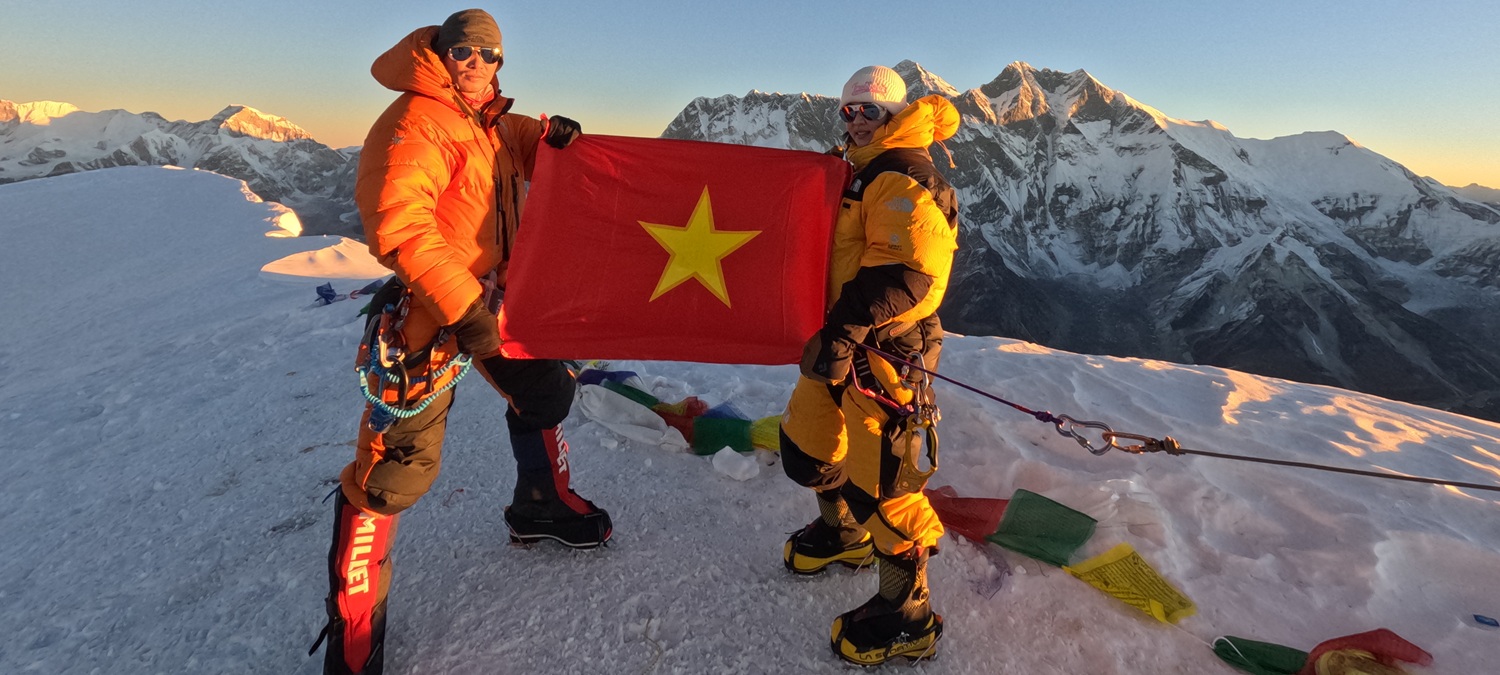
As dawn begins to break, the horizon slowly glows with golden light. Reaching the summit at 6,812 meters is an emotional and unforgettable moment. Standing on one of the most beautiful peaks in the world, surrounded by a sea of Himalayan giants, you feel both humbled and empowered. The journey, the preparation, the sacrifices, all lead to this single breathtaking moment.
After celebrating briefly and capturing memories, we begin our careful descent back to Camp II. The return requires equal focus and discipline, as safety remains our highest priority.
Back at Camp II, exhausted yet fulfilled, you rest with an overwhelming sense of achievement. Today, you stood on the summit of Ama Dablam. And that memory will remain with you for a lifetime.
In the high Himalayas, patience is strength.
Today is reserved as a contingency day in case weather conditions or mountain safety prevented the summit attempt on the previous day. On peaks like Ama Dablam, flexibility is not optional. It is essential.
Strong winds, snowfall, or unstable conditions can temporarily close the summit window. At Ama Dablam Expeditions, safety always comes first. If needed, we use this day to wait for improved weather, reassess conditions, and prepare for a renewed summit push.
If the forecast turns favorable, this becomes our second opportunity to ascend to 6,812 meters and stand on the summit. With acclimatization already completed and the route familiar, climbers are mentally and physically prepared to seize the right moment.
If the summit was already achieved on Day 14, this day provides valuable buffer time and allows a more relaxed descent schedule. High altitude climbing requires patience and respect for nature’s timing.
Whether used for a summit attempt or recovery, this contingency day reflects our commitment to strategic planning, safety, and maximizing success in the mountains.
In the Himalayas, those who wait wisely often stand highest.
After the intensity of the summit days, today we make our full descent back to Base Camp.
Leaving the high camps behind, we carefully retrace our steps down the exposed ridges and fixed rope sections of Ama Dablam. The descent requires as much focus as the ascent. Every anchor, every rappel, and every movement is handled with discipline and teamwork.
As we lose altitude, breathing becomes easier and energy slowly returns. The dramatic terrain that challenged us on the way up now feels familiar. The technical sections are passed with confidence, guided by our experienced Ama Dablam Expeditions Sherpa team.
When Base Camp finally comes into view, it brings a deep sense of relief and accomplishment. The colorful tents, set beneath the towering south face, feel welcoming after days spent high on the ridge.
Reaching Base Camp at 4,570 meters marks the completion of the climbing phase of the expedition. Whether you stood on the summit or gave your strongest effort on the mountain, you have achieved something extraordinary.
Tonight, surrounded by teammates and the silent Himalayan giants, there is time to reflect, celebrate, and truly appreciate the journey you have just lived.
With the climbing phase complete, we begin our journey back toward civilization.
Leaving Ama Dablam Base Camp behind, we retrace our steps through alpine meadows and traditional Sherpa settlements. The trail feels different now. The pressure of the summit is gone, replaced by a quiet sense of fulfillment and reflection.
Passing once again through Pangboche and the peaceful grounds of Tengboche Monastery, there is time to appreciate the spiritual heart of the Khumbu region. The mountains that challenged and inspired us now stand behind, majestic and unforgettable.
As we descend, the thicker air feels refreshing and energizing. The body grows stronger with every step downward. Suspension bridges sway gently above the river as we approach Namche Bazaar.
Arriving back in Namche brings a sense of comfort and celebration. Warm bakeries, friendly lodges, and familiar surroundings welcome us once again. Tonight, we rest in this vibrant mountain town, sharing stories of the climb and honoring the journey we have completed on Ama Dablam.
The adventure is slowly winding down, but the memories will last forever.
Today we make our final trek through the Khumbu region as we return to Lukla.
Leaving Namche Bazaar behind, we descend along the familiar trail that winds through pine forests and traditional Sherpa villages. The journey feels lighter now. The summit pressure is gone, replaced with gratitude and reflection.
We cross the swaying suspension bridges above the Dudh Koshi River and pass through Monjo and other small settlements that welcomed us on the way up. The rhythm of walking feels comfortable, and the thicker air at lower altitude brings renewed energy.
As we approach Lukla, emotions begin to settle in. This small mountain town marks both the gateway to the Everest region and the closing chapter of our climbing adventure on Ama Dablam.
Arriving in Lukla is a moment to celebrate. Together with our Ama Dablam Expeditions team and Sherpa staff, we share final laughs, gratitude, and appreciation for the teamwork that made this expedition possible.
Tonight, in Lukla, you rest with a full heart. The mountain journey is complete, but the memories will stay with you forever.
After two incredible weeks in the Khumbu region, today we return to the bustling heart of Nepal.
Early in the morning, we board our flight from Lukla back to Kathmandu. The flight offers a final spectacular aerial view of the Himalayan peaks, deep valleys, and terraced villages. Mountains that seemed enormous on foot now appear smaller yet no less majestic from the sky.
Upon arrival at Tribhuvan International Airport, our team transfers you to your hotel in Thamel. Here, the comfort of Kathmandu awaits — warm showers, cozy rooms, and the chance to rest after days of high-altitude trekking and climbing.
The afternoon is free to explore the vibrant streets, shop for souvenirs, or simply reflect on the unforgettable journey. Tonight, a celebratory dinner with the Ama Dablam Expeditions team honors your achievement, camaraderie, and the incredible adventure you have just completed.
As the lights of Kathmandu glow below, you realize that while the mountains are behind you, the experience, memories, and triumphs of Ama Dablam will stay with you forever.
Today marks the end of your Ama Dablam adventure and the beginning of your journey home.
After breakfast, you will be transferred to Tribhuvan International Airport for your international flight. As you check in and prepare for departure, there is time to reflect on the incredible journey — the mountains you climbed, the challenges you overcame, and the memories you created in the heart of the Himalayas.
From the plane, take a last look at the towering peaks and valleys of the Khumbu region. The majestic Ama Dablam and surrounding Himalayas will fade into the distance, but the experience and inspiration of this expedition will stay with you forever.
Our team at Ama Dablam Expeditions wishes you a safe journey home and hopes the spirit of the mountains continues to inspire you in all your adventures to come.
Transportation
Accommodation and Food
Staff
Permits and Taxes
Additional
Technical equipment provided: fixed ropes, carabiners, high-altitude tents. Personal gear checklist (rentals available):
Technical Climbing Equipment
Footwear
Clothing & Layering
Lightweight liner gloves
Bags & Storage
Sleeping & Camping
Hydration & Food
Electronics
Personal Medical & Safety
Documents & Essentials
Most Important for Rapid Ama Dablam Expedition
The most critical items include high-altitude boots, crampons, harness, helmet, ice axe, ascender, descender, technical gloves, glacier glasses, goggles, down suit, expedition parka, sleeping bag and reliable climbing layers.
Note: Equipment supplied by the expedition company can vary. Confirm which technical and group equipment is provided before purchasing or renting your gear.
The Rapid Ama Dablam Expedition is a 20-day, professionally supported mountaineering program designed for experienced alpinists who want to climb Ama Dablam within a shorter timeframe. The expedition reaches 6,812 m (22,349 ft) and uses a streamlined acclimatization strategy with rotations through Camp I and Camp II. It is specifically designed for climbers who already have previous 6,000–7,000 m climbing experience, strong physical fitness, and appropriate technical mountaineering skills.
The Rapid Ama Dablam Expedition is a high-altitude, technically demanding climb involving steep rock, exposed ridges, snow and ice terrain, and fixed-rope sections. The itinerary includes technical areas such as the Yellow Tower, Grey Tower, and Mushroom Ridge. Climbers should have substantial high-altitude and technical climbing experience rather than treating this as a beginner expedition. Pre-climbing training at Base Camp also covers fixed-rope techniques, Jumar ascending and descending, rappelling, anchor transitions, and safety procedures.
The rapid itinerary uses strategic altitude rotations instead of extended acclimatization stays. After reaching Ama Dablam Base Camp at 4,570 m, climbers progress through Camp I at 5,700 m and Camp II at 6,000 m, with planned returns to lower altitude for recovery. The itinerary includes a training day, multiple rotations, a rest day at Base Camp, and a contingency day for weather or other conditions. This approach is intended for already experienced climbers who can adapt to altitude efficiently.
The complete Rapid Ama Dablam Expedition takes 20 days, according to the published itinerary. The journey includes arrival in Kathmandu, the Lukla flight and trek through the Khumbu, acclimatization at Namche, the approach to Ama Dablam Base Camp, technical training, rotations through Camp I and Camp II, the 6,812 m summit attempt, a contingency day, descent to Base Camp, and return to Kathmandu.
The Rapid Ama Dablam Expedition is intended for experienced alpinists with previous 6,000–7,000 m climbing experience, strong physical conditioning, and technical mountaineering competence. The published climbing seasons are spring (April–May) and autumn (October–November). The actual summit attempt depends on weather, mountain conditions, acclimatization, and safety assessments. A dedicated contingency day is included in the itinerary if the scheduled summit push cannot proceed because of unfavorable conditions.